What is pregnancy?
Pregnancy is the period running from the moment of fertilisation until the delivery. During this time, which tends to last 40–42 weeks, the expectant mother has to adapt to a series of physical and emotional changes, and also pay special attention to her personal care and diet. Childbirth can occur at any time after week 37 of the pregnancy. It involves three stages; firstly the dilation phase, followed by the baby’s exit from the uterus and it ends with the expulsion of the placenta.
Pregnancy and Childbirth explained in first person
We recommend going to A&E when you have regular contractions every 5 minutes which do not lessen with rest. Also, this should have been going on for at least 1 hour, for a second birth. In the case of a first birth, we recommend waiting at least 2 hours with contractions. If your waters break, we recommend going to A&E straight away.
I felt very comfortable and I remember it as one of the best times of my life, both physically and emotionally.
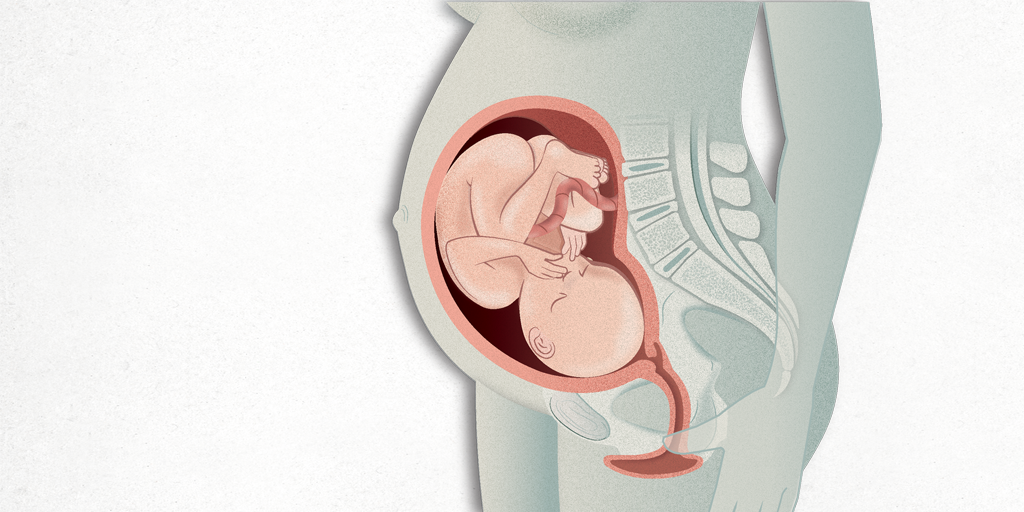
It is called pregnancy, gestation or gravida to the period that goes from the implantation of the fertilised egg in the uterus to the time of partum/delivery.
Ovulation and fertile week
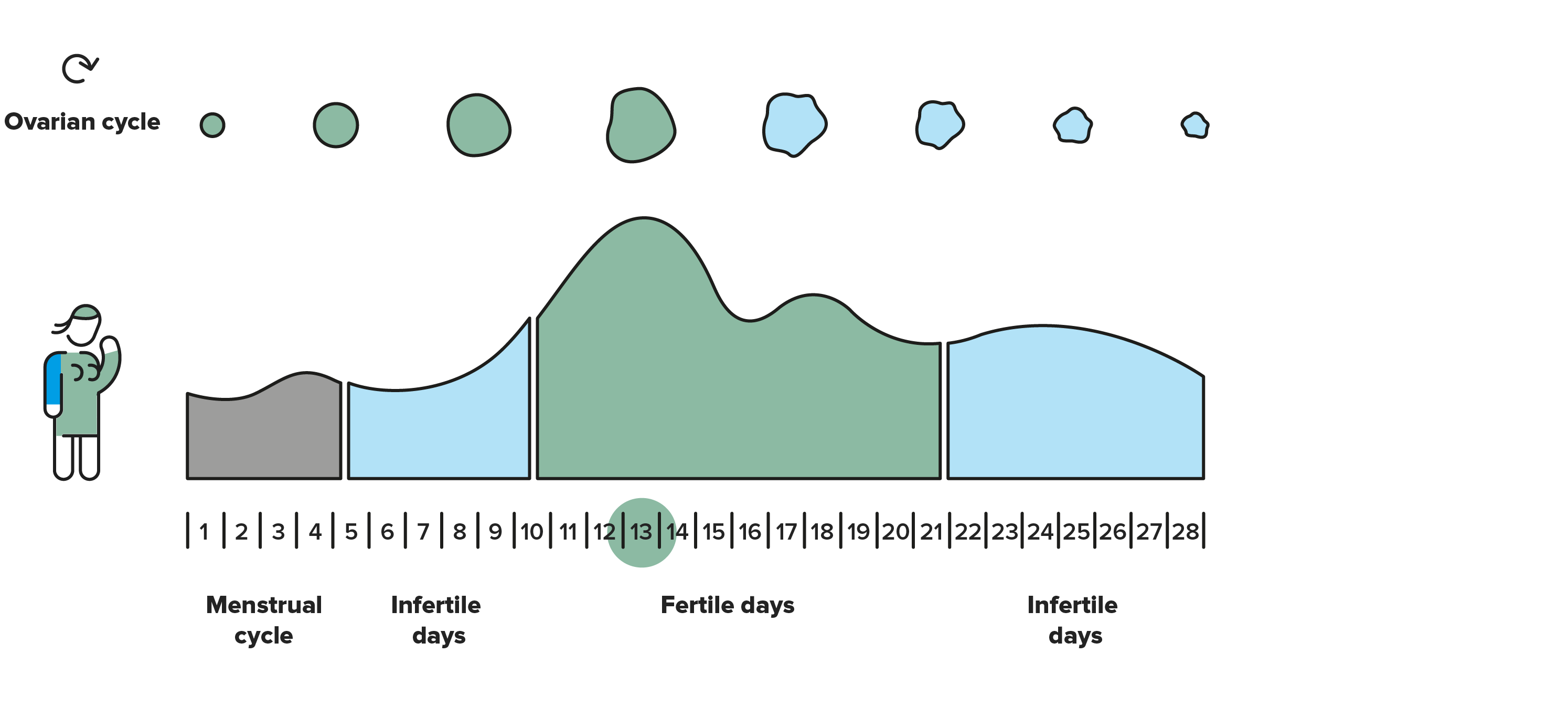
The ovulatory phase, that is to say, the period in which the ovule is released and is ready for fertilisation, lasts for 24 hours. Ovulation occurs in the middle of the menstrual cycle, approximately on day 14. Once it is released, the ovule has a life of only 24 hours, and if it is not fertilised during that time, it ends up dying and is expulsed by means of menstruation.
The day following ovulation, the same day of the ovulation, and the 3 previous days are the fertile days of the woman, that is to say, approximately days 11-15 of the cycle.
The spermatozoids can live in the female genital tract for about 3-4 days. For this reason, if these arrive before ovulation occurs they are waiting to meet up with the ovule.
Duration of the Pregnancy
Human pregnancy lasts 40 weeks from the first day of the last menstruation/period, or 38 weeks from fertilisation (approximately 9 months).
Multiple pregnancy
A multiple pregnancy is one in which more than one foetus is developing. This comes about as a result of the fertilisation of two or more ovules, or when the ovule is divided, giving rise, in this case, to genetically identical twins
The double or twin pregnancy is the most common form of multiple pregnancy, although there are certain occasions in which triplet pregnancies occur.
Non-identical twins come from two different ovules, and have two placentas and two sacs. The babies can be of the same or a different gender.
On the other hand, identical twins are produced by the spontaneous division of a single embryo, generated from a single ovule. They are always the same gender and identical. They may share a single placenta, or have two different ones, and can share a single sac, or each one may have their own.
Normal pregnancy and risk pregnancy
A normal pregnancy is that which occurs with no unfavourable factors (biological, psychological, socio-demographic, etc.) and/or previous maternal diseases or those acquired during the course of the pregnancy, which may interfere in its normal progression.
Pregnancy is classified into the following levels of risk: low, medium, high, or very high.
The risk assessment is updated in each visit as this can vary. For example, a low risk pregnancy may change to a high risk one if diabetes appears during gestation.
If the pregnancy is considered low or medium risk, a midwife will be your main contact.
A high risk pregnancy is one that has more possibilities of developing complications during gestation. In these cases, the woman must be subjected to a more rigorous monitoring, in order to avoid possible risks.
It is estimated that 10% of pregnancies are high risk, and the causes can be very variable and may occur before, during, or after gestation.
If your pregnancy has a high or very high risk, your main contact will be a doctor (obstetric-gynaecologist) and all the specialists that are considered necessary.
Content related
Substantiated information by:


Published: 20 February 2018
Updated: 26 March 2025
Subscribe
Receive the latest updates related to this content.
Thank you for subscribing!
If this is the first time you subscribe you will receive a confirmation email, check your inbox


