What are Cataracts?
A cataract appears when the eye's lens, due to ageing, becomes cloudy, losing its transparency. This prevents focusing on objects, rendering blurry images. It is the first cause of preventable blindness in the world, affecting 8 in every 10 persons older than 75 years old.
Cataract explained in first person
In the early stages, often no treatment is needed. It’s only when the cataract affects the patient’s quality of life and we can’t find any other optical solution, that surgery might be necessary.
After the cataract surgery, I was able to see colours sharp and clear again. My quality of vision and quality of life have improved greatly.
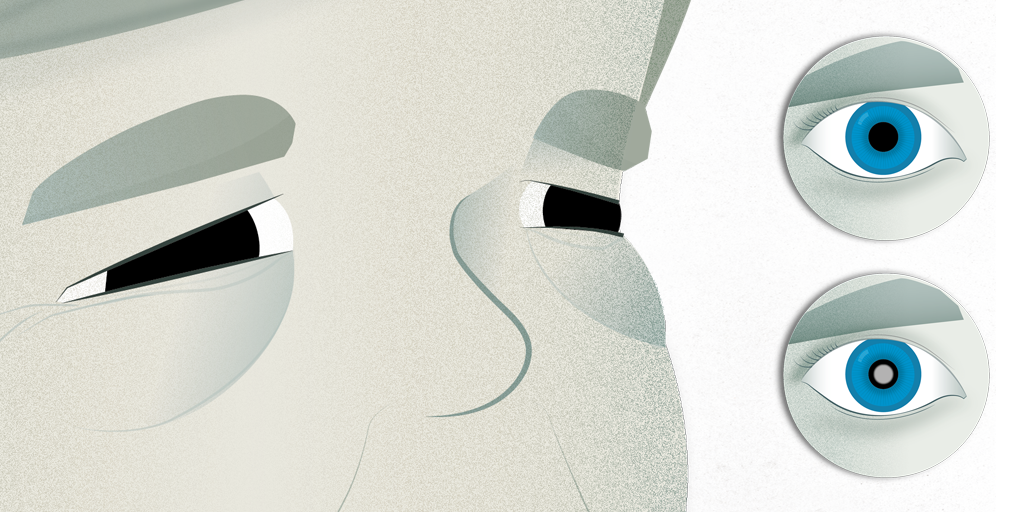
A cataract is opacity of the eye’s normally transparent lens. It prevents light from entering the eyeball and being focused correctly as images on the retina. During the natural ageing process, the lens loses its flexibility, increases in size and becomes cloudy which results in a progressive loss of vision.
How does the eye work?
A cataract is opacity in the lens found inside the eye. Understanding how the eye works helps you appreciate what happens when you have a cataract.
The lens is located inside the eye, behind the iris (the coloured section) and pupil (the black hole in the middle of the iris). In a healthy eye, the lens is transparent and helps focus rays of light on the retina at the back of the eye. The retina sends the signals it receives to the brain, which allows us to see. When a cataract forms, the lens becomes blurred and prevents the rays from reaching the retina.
Types of cataract
Cataracts are classified into four main types according to their appearance when viewed with a slit lamp: nuclear, cortical, subcapsular (anterior and posterior) and mixed. Each type is associated with a specific area of the lens and certain risk factors.

Nuclear cataracts. These involve opacity or discolouration in the centre of the lens which affects vision. The degree of opacity may be an indicator of lens hardness. In advanced cases, the lens turns brown and opaque. Nuclear cataracts tend to progress slowly and affect distance vision more than near vision.

Cortical cataracts. This type of cataract develops in the cortex of the lens, that is, the most peripheral section. They are caused by changes in the water composition of lens fibres, thus creating fissures that look like the spokes of a wheel pointing from the outer edge of the lens towards the centre. Patients with this type of cataract often complain of glare because light is scattered as it passes through the fissures.

Posterior subcapsular cataracts. These start out as a small opaque area at the back of the lens. They are called subcapsular because they form beneath the lens capsule, which is the sac or membrane that envelops the lens and holds it in position. Posterior subcapsular cataracts are more common in young patients than nuclear or cortical cataracts and tend to progress more quickly than other types. Patients usually complain of glare and reduced vision in brighter environments, while near vision tends to be affected more often than distance vision.
Different studies have found that nuclear cataracts are the most common type in people aged over 79 years, but surgery is most frequently performed, and at an earlier stage, in patients with posterior subcapsular cataracts.
Cataracts are the main cause of reversible blindness across the world.
How common are Cataracts?
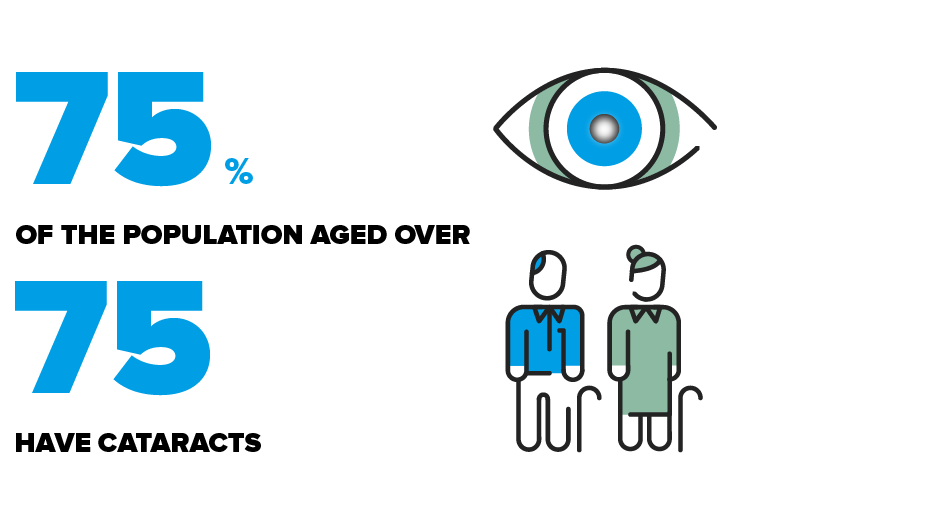
Cataracts are the main cause of reversible blindness across the world. The risk of developing cataracts increases with each decade of life for people aged over 40, and in developed countries around 75% of the population aged over 75 have cataracts.
Related contents
Substantiated information by:


Published: 26 April 2018
Updated: 29 July 2025
Subscribe
Receive the latest updates related to this content.
Thank you for subscribing!
If this is the first time you subscribe you will receive a confirmation email, check your inbox