


14 April 2021
PortalClinic home
Joint project with
BBVA Foundation website.This link opens in a new tab.
What is Mitral Regurgitation?
Reading time: 2 min
Mitral regurgitation is a heart condition that occurs when the mitral valve does not close properly. This valve as well as three other valves (the tricuspid, pulmonary and aortic) separate the chambers of the heart and are responsible for controlling blood flow in one direction.
Mitral Regurgitation in first person
Professionals and patients explain how you live with the disease
Mitral Regurgitation | PortalCLÍNIC
Mitral regurgitation, when it is mild, may not cause any symptoms. When it is significant, it primarily causes fatigue.
Laura Sanchis
Cardiologist
When the heart pumps blood to the rest of the body, the mitral valve closes. If this valve does not close properly, some of the blood flows back into the anterior chamber (from the ventricle to the left atrium and lungs). This situation is known as mitral regurgitation.
Heart valves
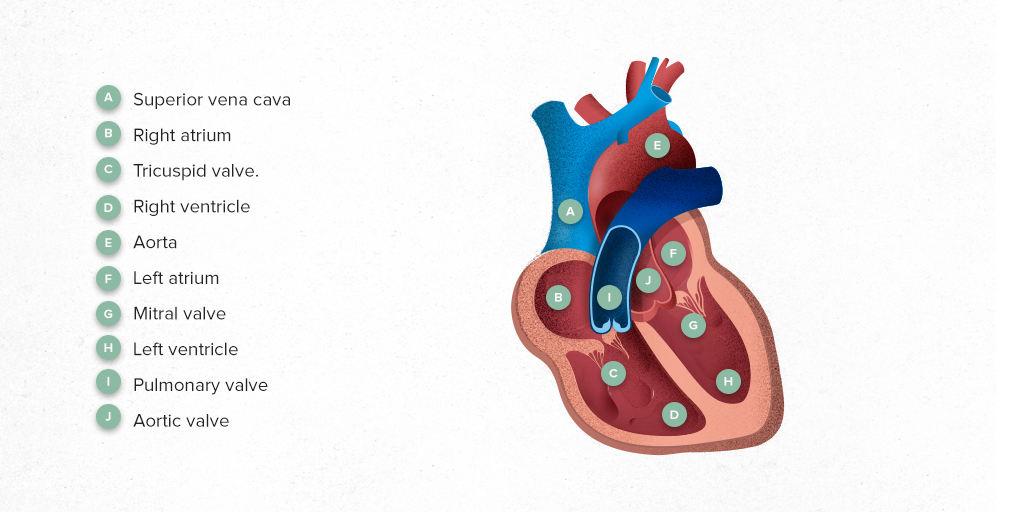
The valves are like flaps, and are located at the outlet of each of the chambers of the heart. They act as gates that allow blood to enter and exit.
The heart has four chambers, two atria (upper chambers) and two ventricles (lower chambers). The mitral and tricuspid valves separate the atria from the ventricles; and the aorta and pulmonary valves separate the ventricles from arteries. These valves prevent the backflow of blood.
The four heart valves are:
- The tricuspid valve. This is located between the right atrium and right ventricle.
- The pulmonary valve. This is located between the right ventricle and the pulmonary artery.
- The mitral valve. This is located between the left atrium and left ventricle.
- The aortic valve. This is located between the left ventricle and the aorta.
Heart valve function
As the heart muscle contracts and relaxes, the valves open and close, allowing blood to flow alternately into and out of the ventricles and atria.
After the left ventricle contracts, the aortic valve closes and the mitral valve opens, allowing blood to flow from the left atrium into the left ventricle. When the left ventricle contracts, the mitral valve closes and the aortic valve opens, letting blood flow into the aorta.
Mechanisms of Mitral Regurgitation
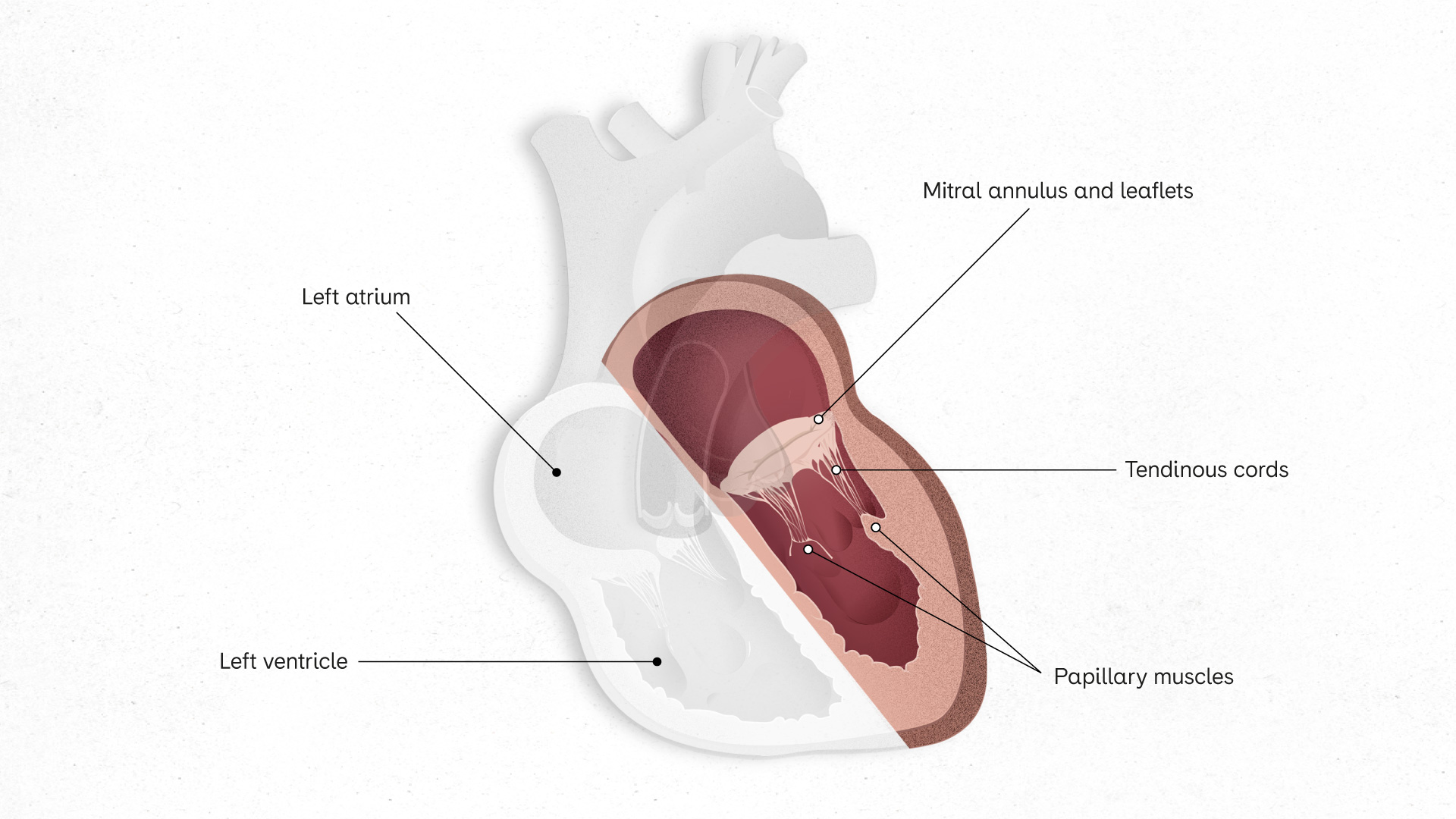
The mitral valve consists of 4 main components that ensure proper closure when the heart pumps blood to the rest of the body. It is a complex structure formed by a mitral annulus that holds two leaflets that are moved (open-close) by the chordae and muscles that join them to the left ventricle.
When the heart beats, the chordae tighten and the leaflets (gates) touch, closing the valve and preventing blood from returning to the anterior chamber. If there is an abnormality in any of its structures (increase in the size of the leaflets, rupture of chordae tendineae or muscle or a widening of the mitral annulus), a a malformation of the valve occurs, with excessive movement of one of its leaflets and inadequate closure.
How many people are affected?
Mitral regurgitation is one of the most common valve diseases whose occurrence increases with age. It affects 13% of people over 75 years of age.

PortalClinic home
Joint project with
BBVA Foundation website.This link opens in a new tab.
Sorry this content wasn't helpful to you. Send us your comment and we will take it into account to continue improving.
Thanks for your help!
An error has occurred and we were unable to send your opinion, please try again later.
Substantiated information by:
César Bernadó
Nurse
Cardiology Service
Laura Sanchís Ruiz
Cardiologist
Cardiology Service
Published: 23 July 2024
Updated: 23 July 2024
The donations that can be done through this webpage are exclusively for the benefit of Hospital Clínic of Barcelona through Fundació Clínic per a la Recerca Biomèdica and not for BBVA Foundation, entity that collaborates with the project of PortalClínic.
Subscribe
Receive the latest updates related to this content.
Thank you for subscribing!
If this is the first time you subscribe you will receive a confirmation email, check your inbox
An error occurred and we were unable to send your data, please try again later.