How does mass sequencing work?
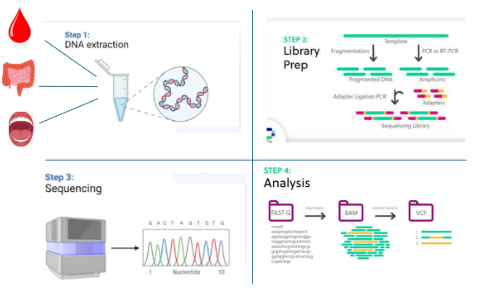
Obtaining and extracting DNA
To study genetic material, a biological sample is needed. This may be:
- Blood.
- Saliva.
- Tissue.
- Hair.
- Other biological material.
Once the sample has been collected, laboratory professionals separate the DNA from the other cellular components to minimise the presence of contaminants. The quality of the sample is essential to ensure reliable results.
Liquid biopsy
For some diseases, such as cancer, it is often necessary to obtain a tissue sample through a biopsy in order to study the tumour's genetic changes. This procedure can be invasive and, in some cases, difficult to repeat over time.
In some types of cancer, tumour cells release fragments of their DNA into the bloodstream. Liquid biopsy takes advantage of this process to study the tumour's genetic material from a simple blood sample.
This makes it possible to identify genetic changes present in the tumour without having to obtain a tissue sample directly. Liquid biopsy can also make it easier to monitor how the disease is progressing and how well the treatment is working by carrying out repeated tests over time.
DNA library preparation
After extraction, the DNA must be processed and prepared for sequencing. During this process, the part of the genome that needs to be studied is selected. Sometimes, DNA fragments need to be multiplied using laboratory techniques such as PCR (polymerase chain reaction) to obtain enough material for analysis.
The resulting material is known as a DNA library. Library preparation is an essential step and requires very strict procedures and thorough quality controls.
Sequencing
Once the DNA libraries have been prepared, they are placed in specialised equipment known as sequencers.
These machines can read hundreds of millions or even billions of DNA fragments simultaneously. This enormous capacity is what gives mass sequencing its name.
Obtaining the first human genome
The first human genome sequence was completed in 2003 as part of the Human Genome Project, after more than ten years of work and an investment of approximately 3 billion US dollars. Today, thanks to advances in mass sequencing, it is possible to sequence an entire genome in a matter of days or weeks and at a much lower cost.
Bioinformatic analysis of the data
Mass sequencing generates a huge amount of information.
This data is analysed by bioinformatics specialists, using a field that combines biology and computer science to study biological and genetic data.
Computer programmes compare the sequences obtained with reference genomes and identify possible genetic variants (changes in the DNA sequence). Genetics and molecular biology specialists then interpret these variants to determine which ones may be clinically relevant.
Substantiated information by:


Published: 23 September 2026
Updated: 23 September 2026
Subscribe
Receive the latest updates related to this content.
Thank you for subscribing!
If this is the first time you subscribe you will receive a confirmation email, check your inbox

