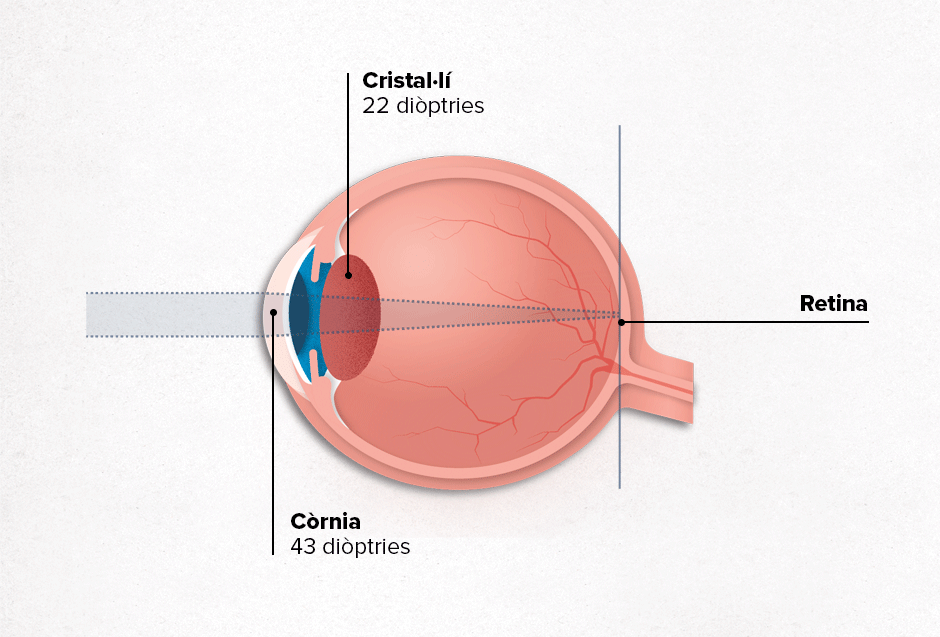



On 12 August, a solar eclipse will be visible. It will be total in the south of Catalonia and partial across the rest of the region. Solar eclipses are fascinating natural events because they temporarily alter the daylight and allow us to watch the Moon pass in front of the Sun in real time. However, they also pose a genuine risk to your eyesight if they are not viewed using the appropriate protective measures. Over the coming years, Spain will experience a rare series of three solar eclipses (2026, 2027 and 2028). Knowing how to protect your eyes is essential in order to prevent irreversible damage to the retina.
Ophthalmology specialists warn that looking directly at the Sun without suitable eye protection can cause permanent retinal damage, even after just a few seconds of exposure. This condition is known as solar retinopathy, or eclipse retinopathy.
What exactly is solar retinopathy?
According to an educational article published in JAMA Ophthalmology, viewing a solar eclipse without the appropriate eye protection can cause serious retinal damage, which may result in reduced vision and a permanent dark spot in the centre of the visual field, known as a central scotoma. This happens because sunlight has both photochemical and photothermal effects, which can effectively "burn" the macula (the central part of the retina) responsible for central vision, reading and recognising faces.
Clinical studies show that this damage particularly affects the retinal pigment epithelium and the photoreceptors in the fovea, located at the centre of the macula and responsible for our sharpest, most detailed vision. In documented cases following the 2017 solar eclipse in the United States, retinal imaging tests, such as optical coherence tomography (OCT), revealed damage consistent with solar burns to the retina.
Symptoms may not appear until several hours or even days after exposure and, in most cases, affect both eyes. They may include:
- Blurred vision.
- A dark spot in the centre of your vision.
- Distortion of lines or images.
- Changes in colour perception.
- Sensitivity to light.
Retinal damage is painless, so you will not be aware that it is happening while the injury is occurring. The extent of retinal damage depends on the intensity and duration of exposure, as well as individual susceptibility. Children, young people and individuals with pre-existing retinal conditions are at greater risk of developing solar retinopathy.
Some patients may experience a full or partial recovery, while others are left with permanent visual impairment. There is currently no proven treatment that can reverse retinal damage.
Why is a solar eclipse particularly dangerous for your eyes?
The Sun is no more dangerous during an eclipse than at any other time. The risk is that, as the Moon covers the Sun and daylight dims, it creates a false sense of safety, making people more likely to look directly at the Sun without experiencing the usual glare. During a partial eclipse, the Sun remains intense enough to damage the retina. In fact, studies suggest that partial eclipses that are close to totality are associated with the highest number of retinal injuries, precisely because they create this false sense of security.
Although there is no direct solar radiation during the brief period of totality in a total solar eclipse, ophthalmologists recommend keeping your eclipse glasses on at all times when looking directly at the eclipse. Totality may last only a few seconds, and it is not always easy to tell exactly when it begins and ends. Just a few seconds of unprotected exposure as the Sun reappears may be enough to cause permanent retinal damage.
The only safe protection: certified eclipse glasses
To view a solar eclipse safely, you should only use eclipse glasses that are specifically designed for solar viewing. These should comply with the international ISO 12312-2 standard and bear the CE mark, indicating that they meet the relevant safety requirements and legal standards for sale within the European Union.
These glasses are designed to block harmful solar radiation and reduce the intensity of sunlight to levels that are safe for the retina. Ordinary sunglasses, no matter how dark the lenses are, do not provide adequate protection and should never be used to look at a solar eclipse.
Do not use homemade alternatives such as smoked glass, old X-ray films, CDs, photographic negatives or improvised filters. They do not block harmful ultraviolet or infrared radiation effectively. Before using eclipse glasses, check that they are free from scratches, punctures or any other signs of damage. It is also advisable to buy them only from reputable manufacturers or authorised retailers.
Take care when using telescopes, cameras and binoculars
Optical devices concentrate sunlight, significantly increasing the risk of eye damage. Looking at the Sun through binoculars or a telescope without a professional solar filter can cause immediate and severe retinal injury.
Eclipse glasses do not provide protection if you are looking through binoculars or a telescope unless the device is fitted with an appropriate front-mounted solar filter.
Safe ways to enjoy the eclipse
Whenever possible, avoid looking directly at the Sun during the eclipse unless you are wearing appropriate eye protection. A safer way to enjoy the eclipse is to use indirect viewing methods, such as:
- Pinhole projector: Make a small hole in a piece of card and use it to project an image of the eclipsed Sun onto a light-coloured surface. This method is completely safe and is especially recommended for children.
- Tree shadows: During an eclipse, the small gaps between leaves act like hundreds of tiny pinhole cameras, projecting multiple images of the partially eclipsed Sun onto the ground below.
Practical tips for viewing the eclipse
To enjoy the eclipse in the best possible conditions, choose an open location with a clear, unobstructed view of the horizon, such as viewpoints, beaches or elevated areas away from buildings and trees that may block your view.
As the eclipse will take place in August, it is also important to be prepared for the heat. Bring plenty of water, wear a hat and sunscreen, and arrive early to make the experience as comfortable as possible. If you are watching the eclipse with children, supervise them closely at all times. They may remove their eclipse glasses or look directly at the Sun impulsively.
When should you see an ophthalmologist?
If you experience any of the following symptoms after viewing the eclipse:
- Persistent blurred vision.
- A dark spot in the centre of your vision.
- Difficulty reading.
- Distortion of lines or images.
Experts recommend seeing an ophthalmologist as soon as possible. Retinal imaging tests, such as optical coherence tomography (OCT), can detect retinal damage consistent with solar retinopathy.
The eclipse will undoubtedly be one of the most spectacular astronomical events visible this summer, as well as during the next two years. Watching it safely is simple and ensures you can enjoy the spectacle without risking damage to your retina.
INFORMATION DOCUMENTED BY:
Dr Carolina Bernal, ophthalmologist at the Clínic Ophthalmology Institute, Hospital Clínic Barcelona.