Contact dermatitis is an inflammatory skin disease that occurs when the skin comes into contact with external substances capable of causing irritation or triggering an allergic reaction. It can affect people of all ages, though it is more common from middle age onwards, particularly among women and in professions with a higher risk of exposure.
Contact Dermatitis explained in first person
There are increasingly more treatments available, with fewer adverse effects, and more specific and skin-friendly cosmetics.

Many different substances may be involved, including soaps, cosmetics, fragrances, jewellery and plants. To treat contact dermatitis, it is necessary to identify and avoid the cause of the reaction.
Types of Contact Dermatitis
Contact dermatitis is generally classified into two main types:

Allergic contact dermatitis. Appears when a person is sensitive to a particular substance (allergen) that triggers an immune response in the form of skin lesions that reappear after every instance of exposure to the allergen.

Irritant contact dermatitis. It occurs when an irritating substance comes into contact with the skin and can affect anyone.
How many people are affected?
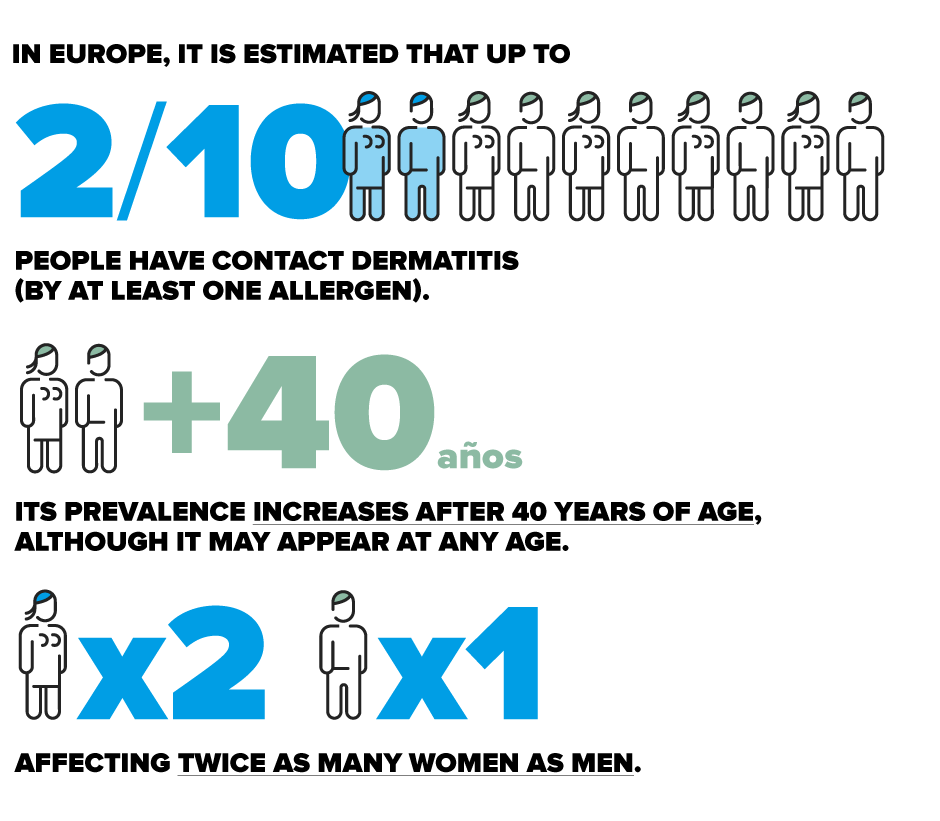
Contact dermatitis affects approximately 15–20% of the general population, and its frequency increasing due to exposure to metals, fragrances and preservatives found in cosmetic, industrial and household products. Although it may appear at any age, its prevalence increases after 40 years of age, affecting twice as many women as men. Women also tend to be affected earlier.
Substantiated information by:


Published: 25 May 2020
Updated: 28 May 2026
Subscribe
Receive the latest updates related to this content.
Thank you for subscribing!
If this is the first time you subscribe you will receive a confirmation email, check your inbox