Symptoms of Epilepsy
The symptoms of the disease correspond to the sensations that the patient feels when the neuronal groups responsible for their seizures are activated. Some patients notice a sensation before losing consciousness called aura. The type of sensation or aura depends on the function of these neuronal groups, and it is usually the same in each patient. Some of these symptoms are:
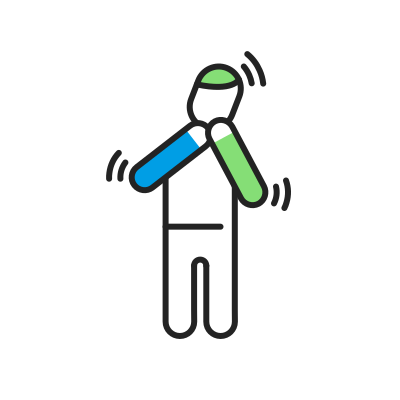
Fear. It comes and goes quickly. This usually occurs in temporal lobe epilepsy.

A feeling of having experienced a situation before (déjà vu). Typical in temporal lobe epilepsy.
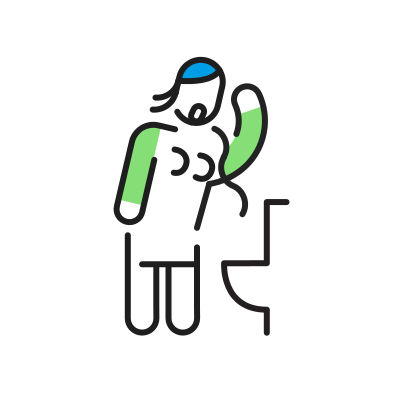
Nausea or a rising sensation coming from the stomach (epigastric aura).
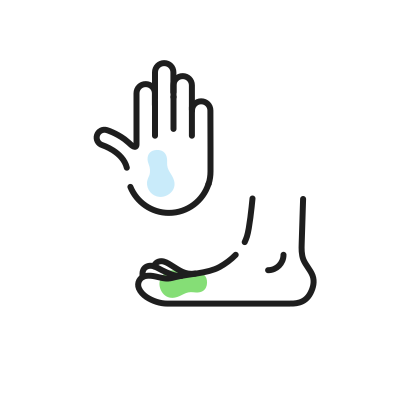
A tingling feeling in one area of the body. This is usually associated with epilepsy affecting the parietal lobe or sometimes in the frontal lobe.

Seeing lights, colours or figures. In cases of epilepsy that affect the posterior quadrant of the brain (posterior temporal, parietal and occipital lobes).
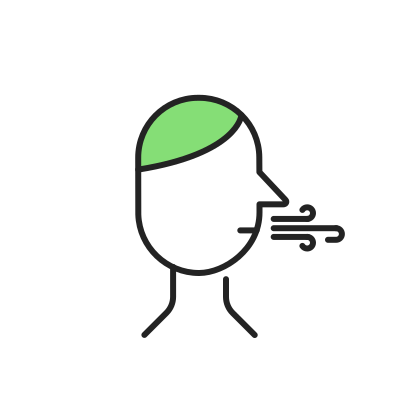
Unusual odours, generally unpleasant ones. This is common for epilepsy associated with the frontal and mesial temporal regions of the brain.

Unusual noises and distorted sounds. In cases of epilepsy affecting the neocortical temporal, opercular and insular regions of the brain.
Signs of epilepsy
The clinical signs of epilepsy are the objective manifestations observed during a physical examination.

Altered, or impaired, level of consciousness. The patient is absent and does not respond to questions, they are unaware of themselves and their surroundings.

Automatism. The patient repeatedly moves their mouth or hands (e.g., repeated swallowing, touching their clothes, etc.). They may or may not be “absent” during this episode and, in general, they do not remember afterwards.
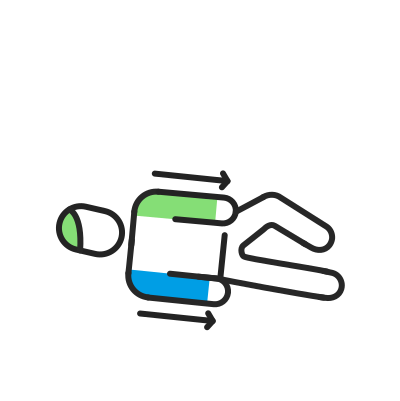
Stiffness. This can affect one limb, the face or the whole body (tonic seizures). Clusters of tonic seizures are the most telling indication of West syndrome, an epileptic disorder in infants.
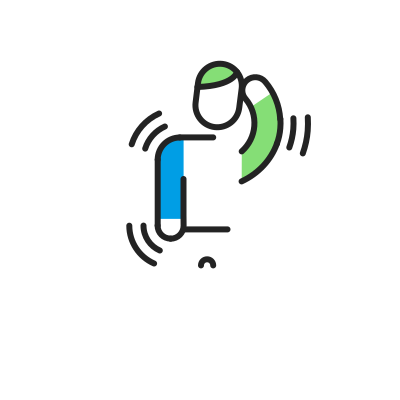
Muscle spasms. These can affect one limb, the face or the whole body (clonic seizures).
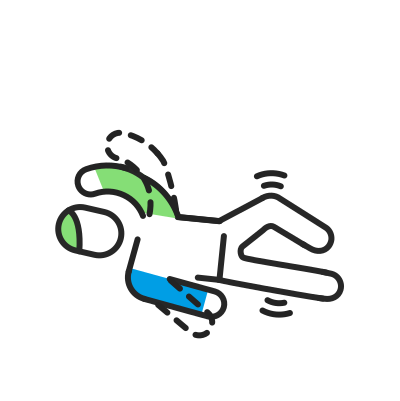
Convulsions. A generalised convulsion consists of a tonic phase, in which the entire body goes stiff and the patient produces a guttural sound, followed by generalised jerking in the arms and legs. The whole seizure tends to last 2–3 minutes, and the patient may bite their tongue and experience urinary incontinence.

Confusion. Patients are often confused after a seizure involving impaired consciousness or a generalised tonic–clonic seizure.

Difficulty speaking. Some seizures are only identified by the fact that the patient, who remains fully conscious, struggles to find the words to express themselves (aphasic seizures). However, other patients with seizures that start in the hemisphere of the brain that controls language experience aphasia for a few minutes after the seizure.
Substantiated information by:

Published: 22 May 2018
Updated: 10 July 2025
Subscribe
Receive the latest updates related to this content.
Thank you for subscribing!
If this is the first time you subscribe you will receive a confirmation email, check your inbox