How long does it last?
The administration of chemotherapy is divided into periods known as "cycles" which are regular intervals of time. In most cases, these are 2, 3 or 4 weeks. They usually include more than one day of treatment within each cycle with rest periods in between.
In the case of intravenous chemotherapy, each cycle can include between 1 and 5 administrations, which can be in consecutive or alternate days or weeks. The duration of each intravenous administration will depend on the type of chemotherapy administered. There are some chemotherapies that can be administered in 30 minutes, while others require up to 6-8 hours since, in addition to chemotherapy, other medications have to be administered, such as physiological saline (to protect kidney function), antiemetics (to prevent nausea) or prophylaxis for possible allergies. In some types of cancer, the patient takes the chemotherapy home in a continuous infusion pump for a period of time.
For example, a 3-week cycle may have 2 days of chemotherapy, on days 1 and 8, with day 15 off:
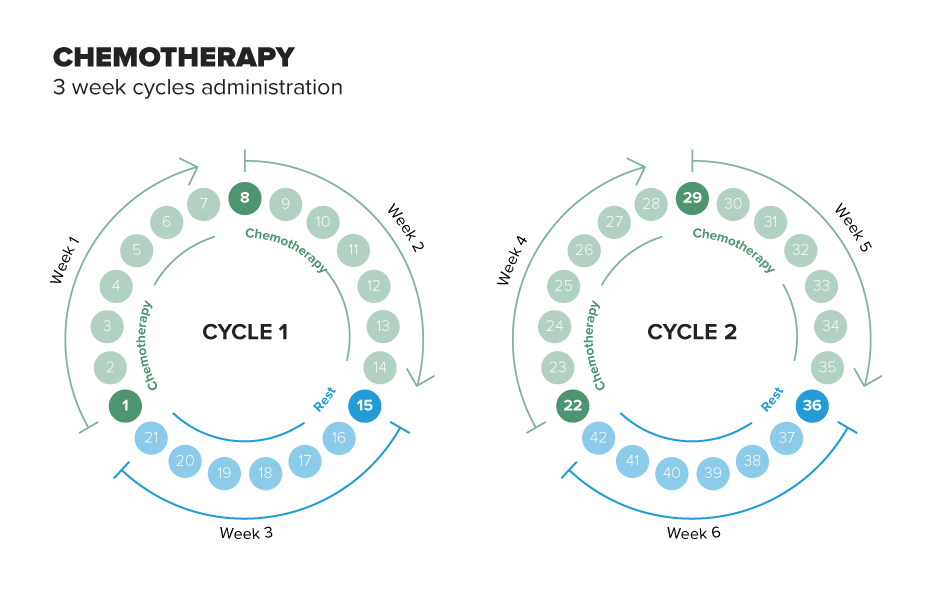
For oral medication, the cycles are usually 3-4 weeks and the medication regimen may be continuous, for example, taking it every day for 4 weeks; or with rest periods, for example, 3 weeks in a row, then 1 week off, before starting again.
Substantiated information by:

Published: 15 November 2021
Updated: 15 November 2021
Subscribe
Receive the latest updates related to this content.
Thank you for subscribing!
If this is the first time you subscribe you will receive a confirmation email, check your inbox


