What is bipolar disorder?
Bipolar disorder is a chronic mental illness that affects the mechanisms that regulate mood. One of the main problems is that it takes between 5 and 10 years to detect because it is often confused with depression, which is usually seen first in most cases.
Although there is still no cure, proper monitoring and treatment let most patients lead a normal life at work and in social and family settings.
The less severe form of bipolar disorder affects between 1-2% of the world's population.
Bipolar disorder explained in first person
The main complication that a bipolar patient can have if they don’t follow the treatment is that they can have relapse that may be more intense and, thus, if the symptoms are more severe, they require hospitalisation.
It’s a brilliant state that I don’t want to leave. The disease becomes an ally.
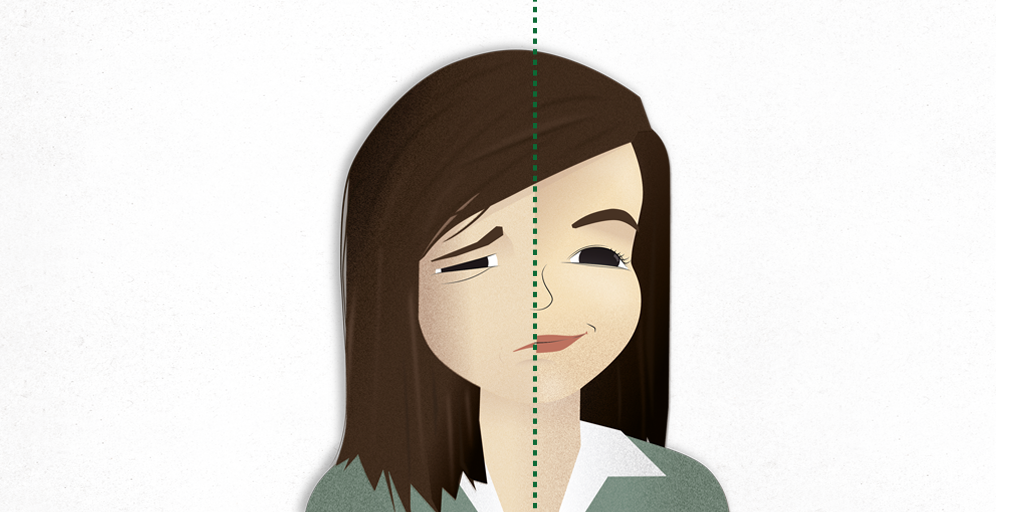
Bipolar disorder presents as recurrent episodes that go from mania or hypomania (happiness, exaltation, or euphoria), to depression (sadness, inhibition, and ideas of death). These mood variations significantly influence the social, family, academic, or occupational aspects of the individual that has the illness. Treatment with drugs is essential, although sometimes it is necessary to complement it with psychological treatment.
What is not bipolar disorder?
It is very common for bipolar disorder and the term “bipolarity” to be used in various contexts and situations that have nothing to do with the disorder. This not only gives rise to confusion, but it contributes to a growing stigma around the problem. Therefore, it is important to clarify what bipolar disorder is not:
- It is not just a problem of personality or character, but it also has a biological basis. It is not an uncontrollable problem, nor does it have a poor prognosis. There are many effective therapeutic options available, including pharmacological (essential) and non-pharmacological, which allow the individuals to lead a normal life.
- It is not an illness associated with violent or dangerous behaviour.
- It is not a temporary or occasional problem. It is an illness that, although it can be suitably controlled, requires care and treatment continuously throughout life.
- It does not have traumatic events during childhood as its main cause. Although these may be triggering factors or have an influence on its progression, they are not determining factors for development.
Is Bipolar Disorder very common?
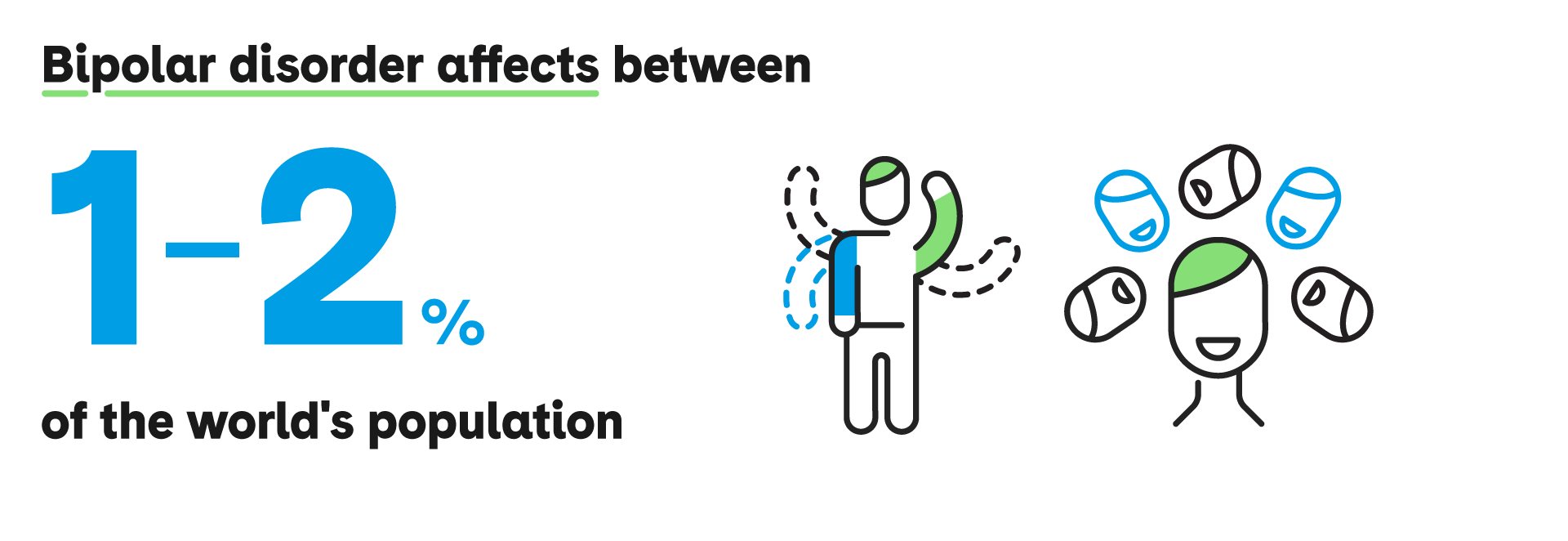
Bipolar disorder is an illness that, in its less severe form, affects 1-2% of the population.
Types of Bipolar Disorder
There are four types of bipolar disorder: cyclothymia, bipolar disorder type I, type II, and bipolar-type schizoaffective disorder.
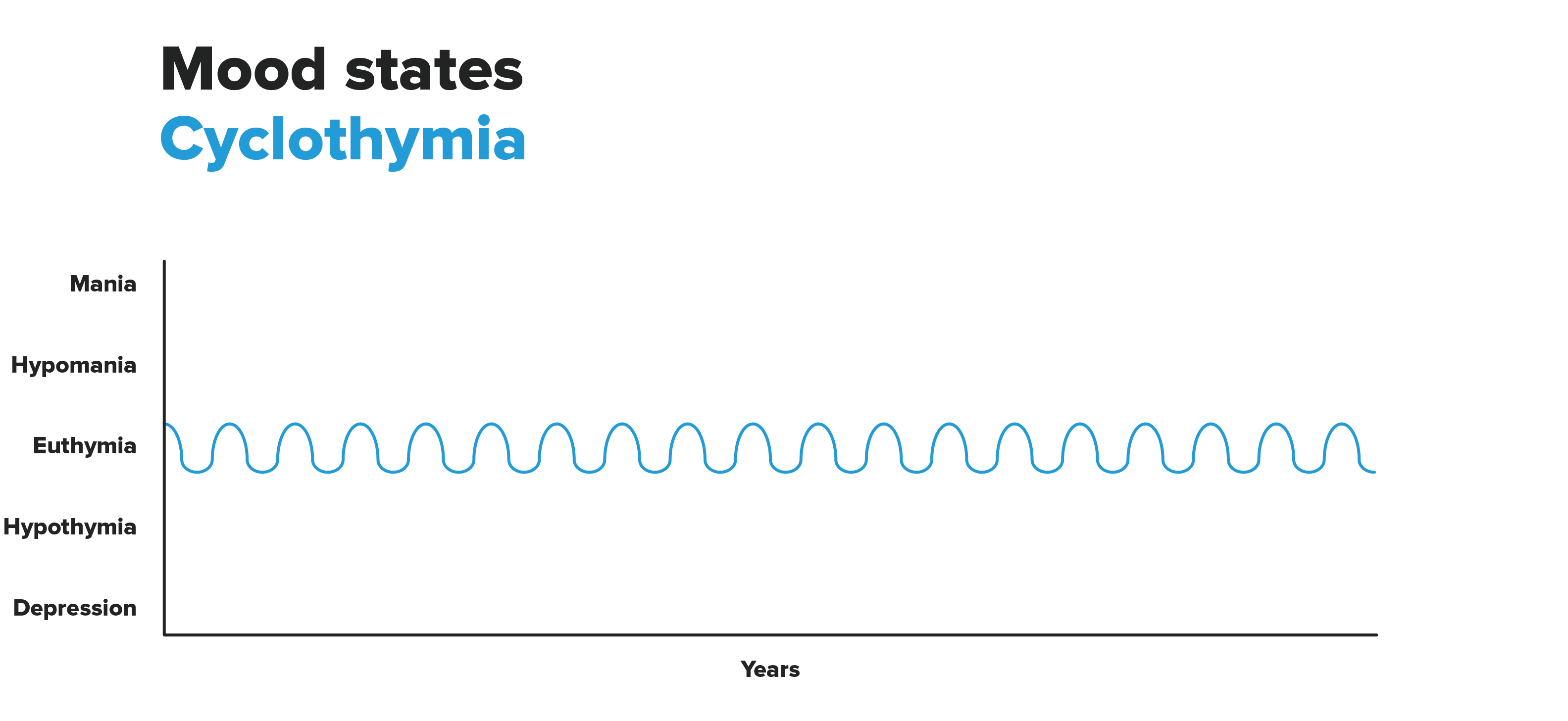
Cyclothymia is characterised by mild variations in mood, although sufficient to reduce the quality of life and functionality of the person that has it. These patient types do not usually go to the psychiatric or psychology clinic on considering that these changes form part of their character. These individuals are usually thought of as whimsical or unpredictable.
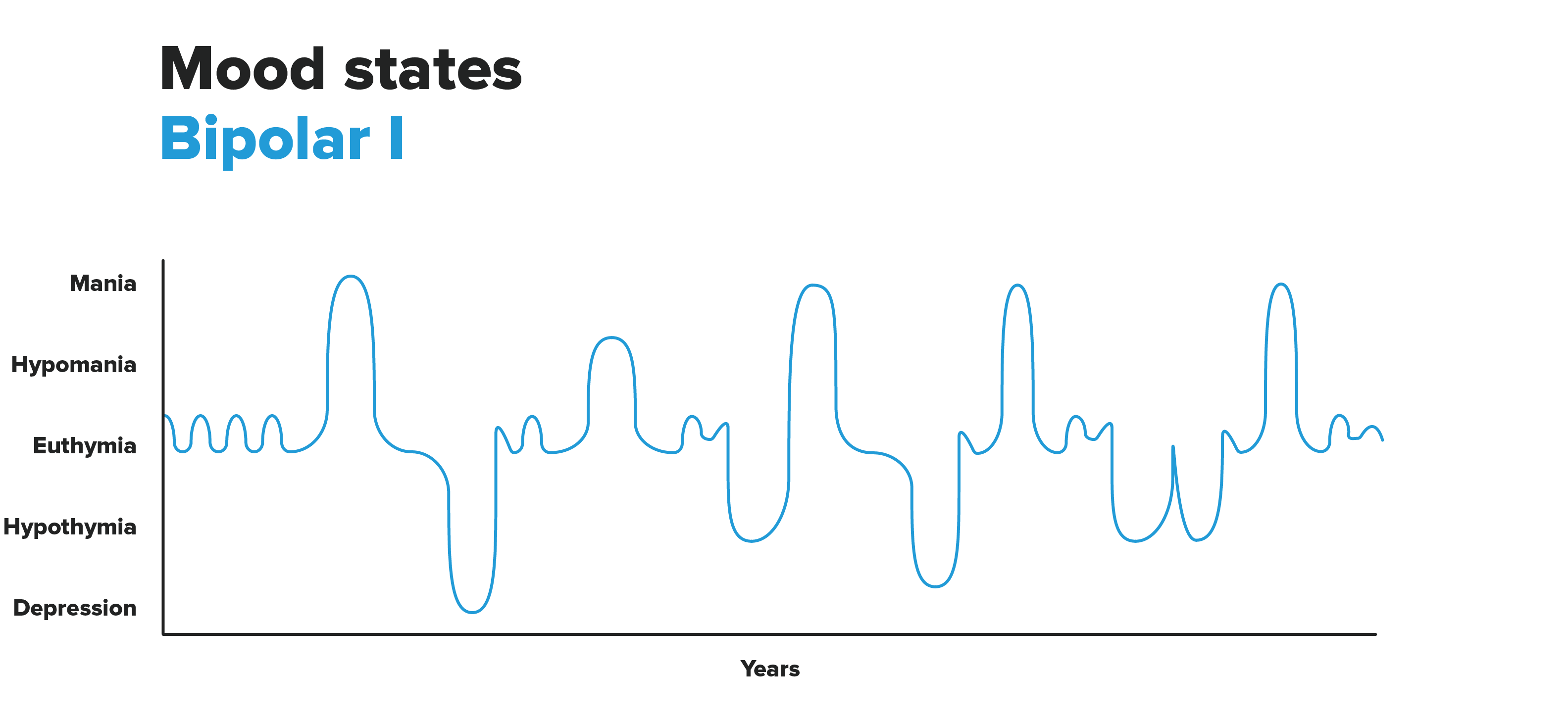
The patient affected by bipolar disorder type I can present with episodes of mania, hypomania, and depression, while those with type II only present with hypomania and depression. Obviously, they are not closed categories: when an individual with bipolar disorder type II has a manic episode, it is then considered as bipolar type I.
The bipolar type schizoaffective disorder is very similar to bipolar type I, with the difference that the schizoaffective usually has psychotic symptoms (hallucinations and delusions) even during the asymptomatic phases of the illness (euthymic phases), while in the person with bipolar disorder type I, the psychotic symptoms only appear in the context of a manic or depressive phase.
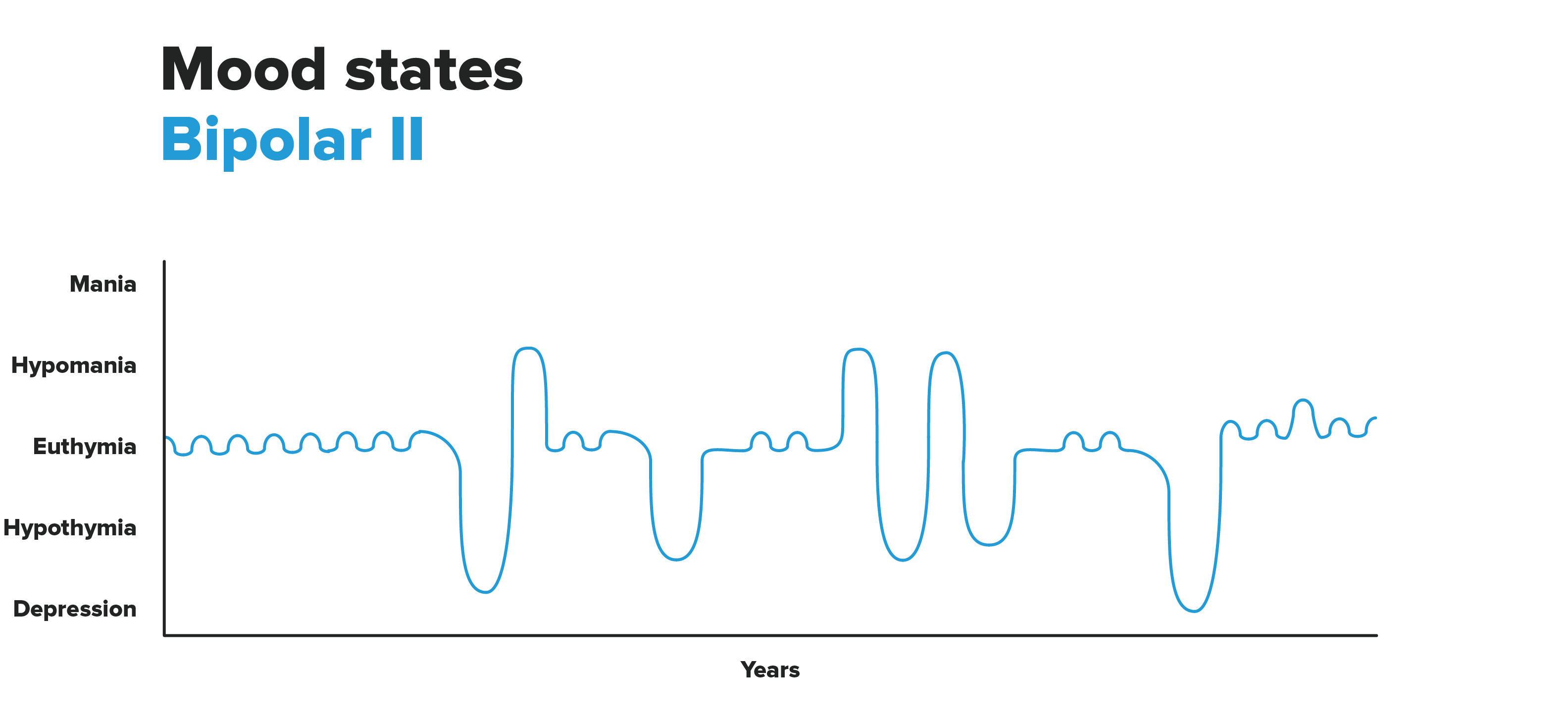
Traditionally, it was thought that bipolar disorder type II was a minor form of the illness, since the episodes of euphoria are not as severe and never require admission to hospital. But, it should also be taken into account that the depressive episodes can be as, or more, severe in the bipolar type II than in the type I patient. On the other hand, although the mixed or manic episodes are more severe in the case of type I, the remission is usually better and, besides, the bipolar type II patients usually have more episodes. Thus, it cannot be categorically stated that one subtype of the disorder is more severe than the other.
The classification of bipolar disorders into different subtypes is, in part, a means for the professionals to reach a consensus and to establish a particular prognosis of a group of patients that have several characteristics in common.
Substantiated information by:


Published: 20 March 2018
Updated: 21 January 2026
Subscribe
Receive the latest updates related to this content.
Thank you for subscribing!
If this is the first time you subscribe you will receive a confirmation email, check your inbox