What is Internet addiction?
Internet addiction is a controversial concept from a scientific point of view. It is widely used to refer to a loss of control when engaging in any type of rewarding activity using a screen or device with an Internet connection; and can end up affecting the physical, mental and social disposition of the person.
Addiction to the Internet in first person
Internet addiction should be prevented from early childhood, through medical, social and educational channels, psychoeducation with families and children, advising on the correct use of new technologies and warning about the possible risks of improper use.

Some of the Internet activities that can become addictive after compulsive repetition are:
- Taking part in online video games
- Using social media
- Looking for information
- Watching videos, series or films
- Making purchases
- Betting on games of chance
Using screens while connected to the Internet is part of everyday life, and most people use them in a healthy and responsible way. However, some people, particularly children and adolescents, may have problems controlling their use because certain parts of their brain are still developing.
Internet addiction: a controversial subject
"Internet addiction" is a controversial subject because there is no scientific consensus on a definition for it. On the one hand, it is important to be cautious when talking about Internet addiction in general, as this problem usually arises from specific online activities. On the other hand, because Internet use is now so widespread, some experts warn that considering intensive use as an “addiction” could risk labelling normal, healthy behaviour - such as studying, working, communicating or spending free time online - as unhealthy.
Additionally, some authors believe that so-called "Internet addiction" is actually a symptom of other underlying disorders, such as depressive disorder or certain difficulties in interpersonal relationships.
When an addiction linked to Internet use is diagnosed, treatment usually needs to address not only the addictive behaviour itself, but also its consequences and any other factors that contribute to the problem.
Types of Addiction
There are three types of problems related to Internet use that may require clinical or educational support, each involving different biological, psychological and social factors.
Excessive use. This occurs when the time spent exceeds that recommended, according to the age and particular situation of the user. In the case of minors, the Spanish Paediatric Society has proposed general recommendations about exposure to screens based on the child's age.
Excess exposure could lead to negative, physical, psychological and social consequences, such as those detailed below:
|
Physical consequences |
Psychological consequences |
Social consequences |
|
Tiredness, headache or neck or back problems Dry eyes and other vision problems Carpal tunnel syndrome or tendonitis Insomnia and other sleep problems Weight gain from being inactive, or malnutrition from skipping meals. Immune disorders Lack of personal hygiene. |
Emotional instability, anxiety or depression Irritability, aggressiveness Feeling guilty about not being able to fulfil everyday obligations Poor academic or work performance, absenteeism, etc. Decompensation of previous mental disorders (e.g. panic states, dissociation, mental confusion) Immaturity, poor emotional development, difficulty facing everyday problems |
Social isolation, lack of interest in those who do not share the same hobby Family conflicts (e.g. aggression after imposition of limits) Stealing money from family members Legal problems due to uncontrolled online activities |

Problematic use. This is related to engaging in activities that are inappropriate for one’s age or directly harmful to the individual. In the case of minors and adolescents, anxiety disorders and emotional distress are common when conflicts arise on social networks - such as cyberbullying, sextortion or grooming - as well as through exposure to violent content, pornography, incitement to self-harm or suicide and restrictive eating or purging behaviours.

Addictive use. This can be summarised as difficulty in controlling usage, despite being aware of the negative consequences it causes. For an “addiction” to be considered as developed, the loss of control must significantly impact daily life for at least 12 months in adults; with some authors suggesting a shorter period for minors and adolescents.
In general, and especially for minors and adolescents, “Internet addiction” is preferably referred to as “problematic Internet use” (PIU) or “Internet use with a risk of addiction”. This is because early detection of the first symptoms of potential addictive problems is desirable, allowing preventive intervention to begin as early as possible, if necessary.
In addition, among minors and adolescents, problems related to screen use are often associated with underlying mental disorders or with pre-existing issues in their family, school or social environment, which also require intervention.
There may also be problematic, harmful or illicit use of the Internet that requires intervention, supervision and control by the health and/or judicial system.
To delve into these aspects, you can consult the document: “Digital technologies in childhood, adolescence and youth. Generalitat de Catalunya”.
Types of screen-related addictive behaviours
There are various screen-related activities that may be problematic or addictive. They can be grouped according to different criteria. For example, according to:
- Device: mobile phone, computer, video consoles or tablet, for example.
- Activity: video games, e-sports, shopping, social networks, online surfing, bets and pornography
- Whether they involve spending money or not: Buying, betting, video games with prizes or the possibility of buying virtual accessories, etc.
- Individual or group: In the latter case, if it is synchronous (with others at the same time) or asynchronous (shared at different times via social networks).
Although only some of the following behaviours are recognized as potentially “addictive” in current diagnostic manuals (DSM-5 and ICD-11), in practice the term “Internet addiction” may refer to different types of screen-based activity:
Video games. “Video game use disorder” (online and offline) was officially recognized by the World Health Organisation in 2019. It usually affects minors and adolescents more than adults, and can seriously impact their school and social adjustment.

Social media. People with this problem check, post updates and comment on their social networks constantly. Social interactions through the Internet can end up becoming more important than relationships in person.

Online betting. This disorder is also recognized by the World Health Organisation. Unlike with video games, the main motivation of people with addiction to betting is to make money; and this can occur both online and in person.

Online entertainment. This can become "problematic" or even "addictive" when looking at web pages or watching videos or other online content becomes virtually the sole leisure activity, impairing the ability to meet daily obligations.
Pornography or cybersex. This is considered problematic or addictive when online pornography is viewed and collected compulsively, or when chats and adult virtual sex services are used excessively, affecting psychosocial adjustment.

Online purchases. So-called “compulsive buying” can occur online and is characterised by an uncontrollable urge to acquire products through digital platforms, negatively affecting a person’s personal, emotional and financial life.
Internet addiction alarm signs

Preoccupation with and excessive prioritisation of internet-connected screens.
Progressive increase in time of use (tolerance) as well as discomfort in the form of anxiety, irritability or aggressiveness when it is not possible to perform the activity or access is prevented (abstinence).

Family conflicts, arguments and lying about the time dedicated to screens, along with the associated expense and/or influence on everyday activities (e.g., sleeping is affected, eating times are not observed and homework is not done).
On-screen refuge from small difficulties or everyday problems is taken.

Loss of interest in academic, work, social or leisure activities. Social and family relationships are affected; professional opportunities are lost; academic performance decreases; and obligations of everyday life are abandoned (e.g., school absenteeism and lack of hygiene).
Therefore, the amount of time screens are used may be a “risk marker”, but it is not necessarily a symptom for diagnosing addiction disorder. Thus, an internet-related behaviour may be considered an addictive disorder when it has a negative impact on daily functioning or interpersonal relationships.
How many adolescents does Internet Addiction affect?
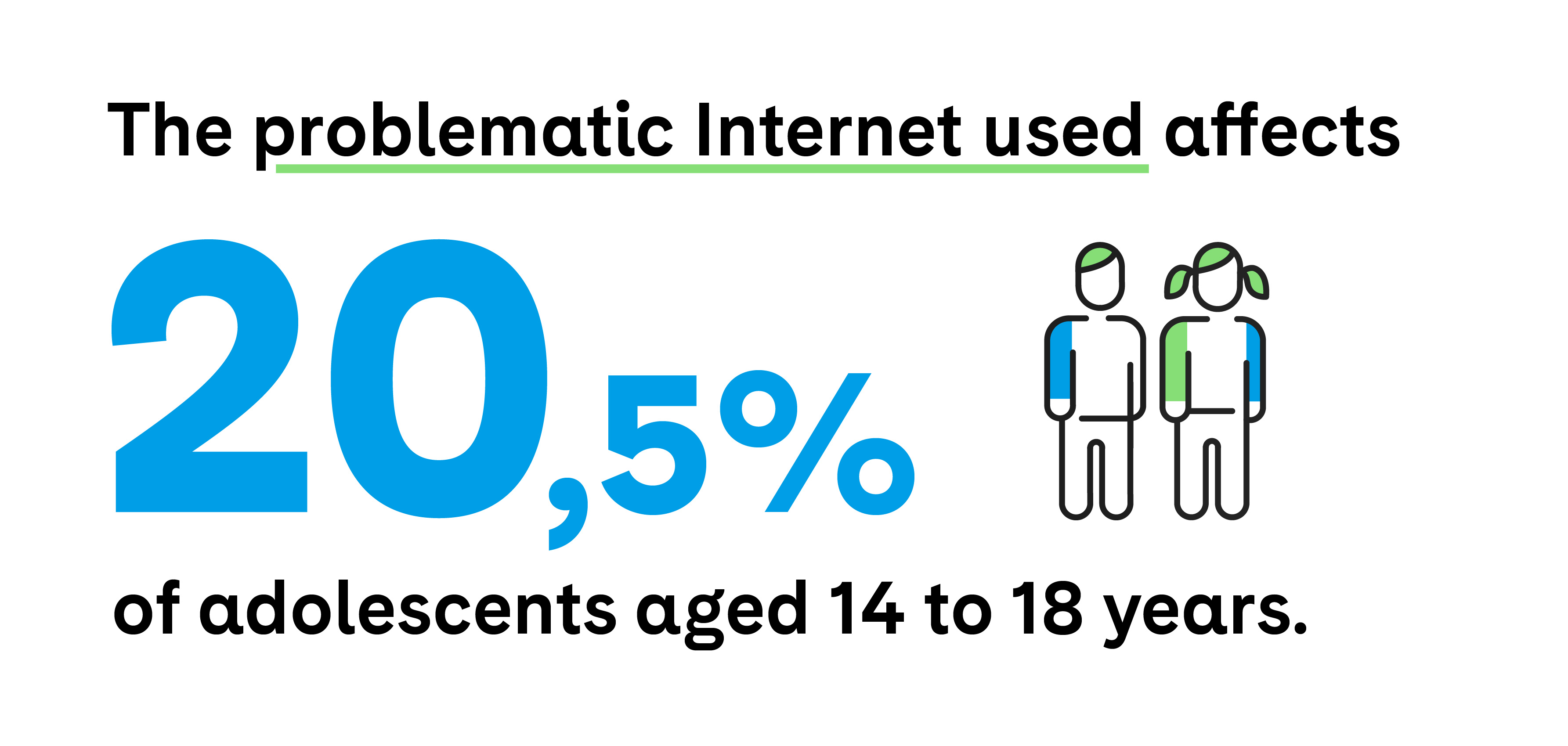
The ESTUDES survey, conducted by the Government Delegation for the National Plan on Drugs, reported the following among adolescents aged 14-18 in secondary education:
- 20.5% have a "problematic use of the Internet". Among them, the average daily time of use is 5.36 hours during the week and 6.97 hours at the weekend.
- 4% have a "problem with spending money online" on sports bets, video games, cryptocurrencies and gambling, for example.
- 5.1% possibly have a "video game use disorder". Of these, 62.2% play video games every day and 13.5% more than 8 hours a day.
Internet addiction in gender perspective
To understand both Internet "addiction" and its prevention and treatment, a gender perspective needs to be added. In general, males have a higher prevalence of problematic Internet use, especially regarding video games and pornography. They usually prefer competitive activities to try to demonstrate their skills, such as in video games and online betting. They also frequently participate in gaming-related chats and forums.
Females on the other hand, have a greater tendency to use social networks, instant messaging and online purchases. They use social networks to keep up to date with their friends and acquaintances, as well as communicate, share photos and videos and other personal content.
When addressing the prevention and treatment of disorders related to video games, social networks and internet use, it should be noted that boys and young men often seek acceptance and recognition by demonstrating gaming skills; this drives them to spend long periods playing and honing their skills. They are also usually more exposed to competitive and aggressive content. Women, by contrast, often experience greater insecurity, depression or anxiety when comparing themselves to idealised or unrealistic standards of attractiveness.
Due to these differences, preventive and treatment programmes for men focus more on the self-control of playing time and promoting non-screen-based leisure activities. Meanwhile, programmes for women prioritise emotional management strategies. In both cases, the development of social skills and self-esteem are worked on.
The most important aspect of the therapeutic approach to Internet addiction is the customisation of the intervention in each case - especially since more and more young people do not identify with either of the two normative genders and do not follow the usage patterns and motivations described above.
Related contents
Substantiated information by:


Published: 16 October 2019
Updated: 16 June 2026
Subscribe
Receive the latest updates related to this content.
Thank you for subscribing!
If this is the first time you subscribe you will receive a confirmation email, check your inbox