Diagnosis of Ovarian Cancer
Ovarian cancer is diagnosed on the basis of the symptoms explained by the patient, a general and gynaecological physical examination that may reveal the presence of a pelvic mass, or which may indicate complementary imaging techniques, such as ultrasound scan, to study the inside of the abdominal-pelvic cavity. Sometimes the presence of the tumour is detected after a scan is performed for a different reason on a patient with no symptoms.

Transvaginal ultrasound. This is the first test that is usually carried out and it more precisely determines the characteristics of the tumour as well as providing information about whether it is benign or malignant.

Magnetic resonance imaging (MRI) and computed tomography (CT). These are useful in some cases and are used to study the abdominal cavity and check how far the tumour has spread.
Positron Emission Tomography (PET). This can be useful for cases of advanced disease or recurrence, as it can show images of the disease that are not visible using other techniques or confirm images that are difficult to interpret.

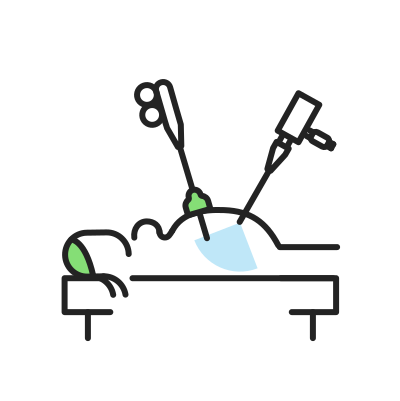
Biopsy. Sometimes, when the tumour is limited to the ovary, it is difficult to determine whether it is benign or malignant. In these cases it may be necessary to perform a biopsy, usually laparoscopically, to find out if it is benign or not, and remove it if the tumour is confirmed to be malignant. In cases of advanced disease, the biopsy, in addition to confirming the diagnosis, provides information on whether complete surgery can be performed, in other words, all the existing tumour masses can be removed, without leaving any visible remains of the disease.
Study of the germline mutational status of the BRCA1/2 gene. For all patients diagnosed with ovarian epithelial cancer, regardless of their family history and age of diagnosis, it is recommended that screening is performed to rule out the disease being part of a hereditary cancer syndrome. This study is done through a blood test.
Substantiated information by:

Published: 3 July 2020
Updated: 3 July 2020
Subscribe
Receive the latest updates related to this content.
Thank you for subscribing!
If this is the first time you subscribe you will receive a confirmation email, check your inbox