What is TIL therapy?
What is TIL Therapy?
TIL (tumour-infiltrating lymphocyte) cell therapy uses the capabilities of the immune system to fight cancer. These infiltrating lymphocytes are the patient's immune cells found in the tumour tissue.
TIL therapy consists of recovering the functionality of the lymphocytes found in tumours, growing them in the laboratory then re-administering them to the patient.
The lymphocytes in tumours are often inactive or in quantities too small for the tumour cells to be eliminated effectively; consequently, the tumours continue to grow.
How does it work?
TIL therapy requires a prior biopsy of the tumour to obtain infiltrating lymphocytes. These infiltrating lymphocytes are the patient's immune cells found in the tumour tissue. Consequently, one of the main limitations of this treatment is that the patient needs to have an accessible lesion to obtain the biopsy.
The first step in TIL therapy is a biopsy to obtain tumour-infiltrating lymphocytes. A series of techniques are then performed on the biopsy sample to obtain the smallest possible fragments; a cell culture is then performed and the reactive lymphocytes selected. After this step, they are multiplied in a bioreactor for 14 days. The cells obtained are those infused into the patient.
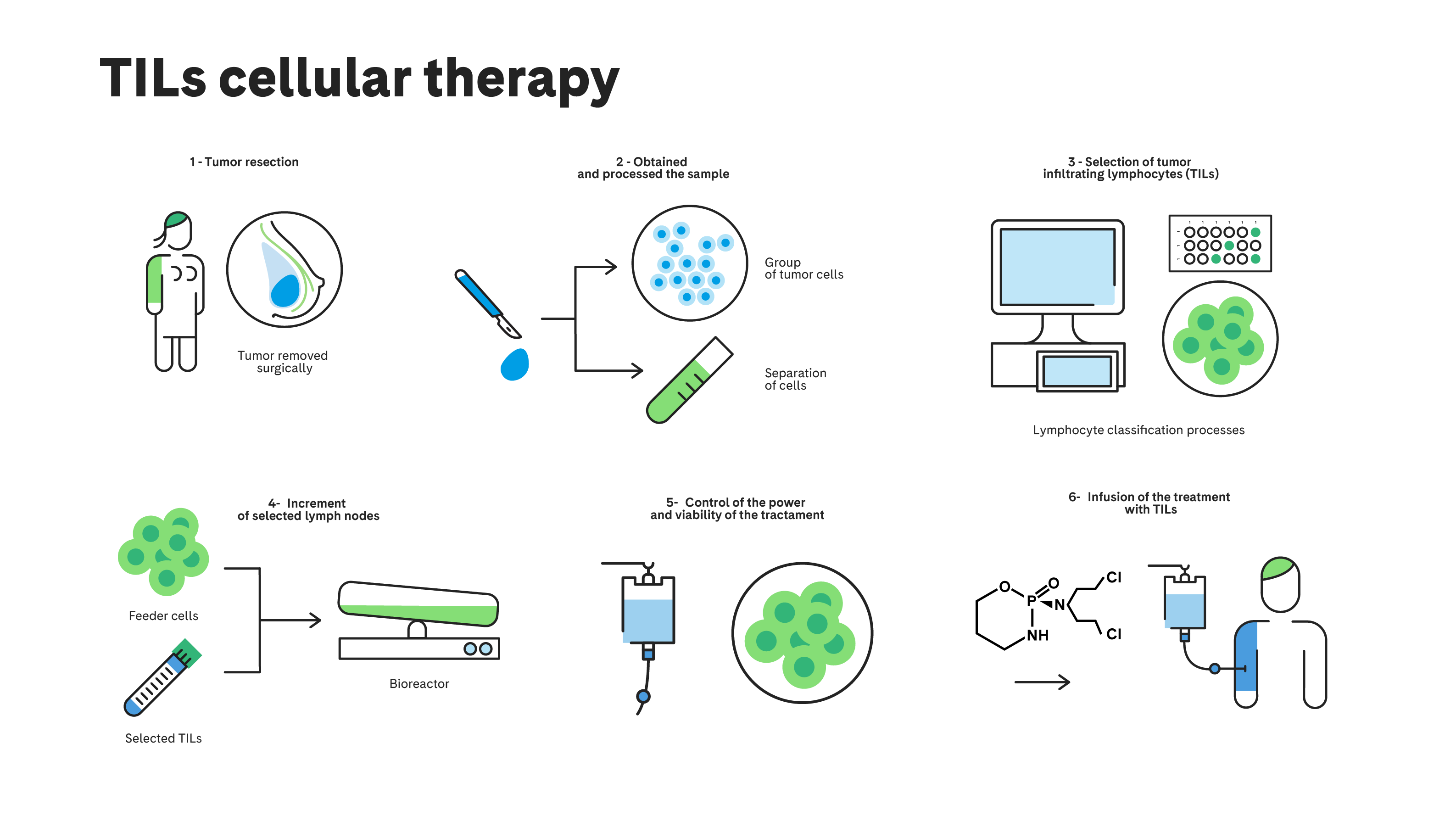
All patients treated with TIL therapy are followed up, so professionals can make decisions to improve the patient's quality of life and analyse new indicators leading to improvements in these treatments.
Like CAR-T therapy, TIL therapy is performed under special Good Manufacturing Practice (GMP) standards.
Substantiated information by:


Published: 21 September 2023
Updated: 21 September 2023
Subscribe
Receive the latest updates related to this content.
Thank you for subscribing!
If this is the first time you subscribe you will receive a confirmation email, check your inbox


