What is COPD?
Chronic Obstructive Pulmonary Disease (COPD) is a disease of the airways characterized by chronic inflammation of the lungs that progressively obstructs the bronchi, producing airflow difficulty, especially when exhaling.
COPD develops gradually and, in general, the symptoms start to become evident from age 40 to 50 years. It affects 10% of the general population and is the fourth leading cause of death in the world.
Chronic Obstructive Pulmonary disease explained in first person
Quit smoking can slow down the progression of the disease.
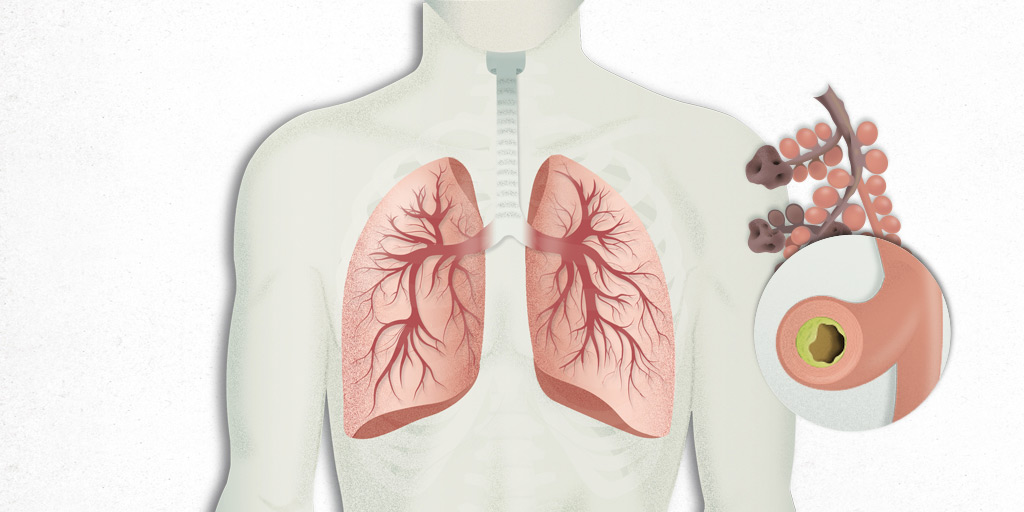
The airflow difficulty becomes apparent, especially during physical activity (exertion dyspnoea). As the disease progresses, the shortness of breath (dyspnoea) is produced with gradually less exertion. This disease is also known as chronic bronchitis or pulmonary emphysema, although the terms are now obsolete.
The main cause of COPD is the inhalation of tobacco smoke (which affects active smokers, but it also has consequences for passive smokers).
Pphysiology of respiration
On breathing, the air enters the body through the nose or through the mouth, down the throat, through the larynx and the trachea, arrives at the lungs, through the main bronchioles and finally at the alveoli. The heart pumps blood from the body to the lungs, and this is oxygenated in the alveoli. The heart then pumps the recently oxygenated blood to the rest of the body. The alveoli are the points of contact between the air we breathe in and the blood; and the carbon dioxide of the blood is eliminated to the outside during breathing.
To breathe, we do all this automatically and it is essential in order to live. It is so natural that we don’t think about how we do it. A healthy person breathes between 11 and 15 times per minute. The lungs are two soft, spongy and pinkish organs that are responsible for breathing. The chest cavity is formed by the ribs, the spinal column, and muscles; although the most important is the diaphragm. Its movements help the air to enter into the lungs.
How many people does COPD affect?
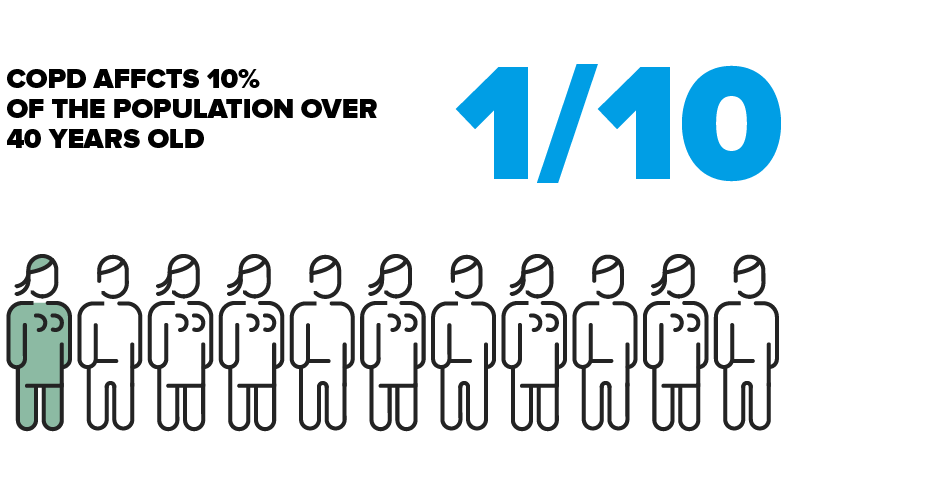
COPD affects approximately 10% of the population over 40 years-old. Despite it being a common disease in adults, the percentage of people diagnosed is very low.
COPD is a complex and very prevalent disease, and it is currently one of the principal causes of morbidity and mortality all over the world. The World Health Organisation (WHO) anticipates an increase in mortality in patients with COPD; as such that it will be the third cause of death in the world in the year 2020. According to recent estimates by the WHO, more than 210 million people suffer from COPD, of whom 80 million have it in a moderate or severe form.
COPD is currently one of the principal causes of morbidity and mortality all over the world.
COPD has a very high impact both at disease level itself (hospital admissions, deterioration in quality of life, sedentary lifestyle, dependence), as well as on the health system (elevated costs, particularly associated with hospital stays, and visits to Emergency Departments).
Its early detection, the multi-dimensional management of the disease, and the individualised treatment can have an impact on the prognosis, the quality of life of the patients, and health costs.
Substantiated information by:


Published: 20 February 2018
Updated: 20 February 2018
Subscribe
Receive the latest updates related to this content.
Thank you for subscribing!
If this is the first time you subscribe you will receive a confirmation email, check your inbox


