What is Inflammatory Bowel Disease?
Inflammatory Bowel Disease (IBD) is a chronic disease of unknown cause in which inflammation of the colon and/or small intestine occurs and with periodic outbreaks of symptoms. Includes two entities, ulcerative colitis and Crohn's disease. It usually affects young people, between 20 and 40 years, although it is also diagnosed in pediatric age and older people.
Inflamatory Bowel Disease explained in first person
It is very important to be informed about the disease and to maintain communication, as well as cooperate, with the referring physician in order to make shared decisions on the health care of the patient.
Go very relaxed, listen to your body more and do not strain it. Follow the instructions of the doctor.
This chronic disease alternates between symptomatic episodes and periods in which the symptoms disappear after customizing medical treatment.These episodes are very unpredictable because their frequency and severity vary greatly. Nonetheless, 50% of patients present only mild symptoms and most of the time are asymptomatic.
The digestive system
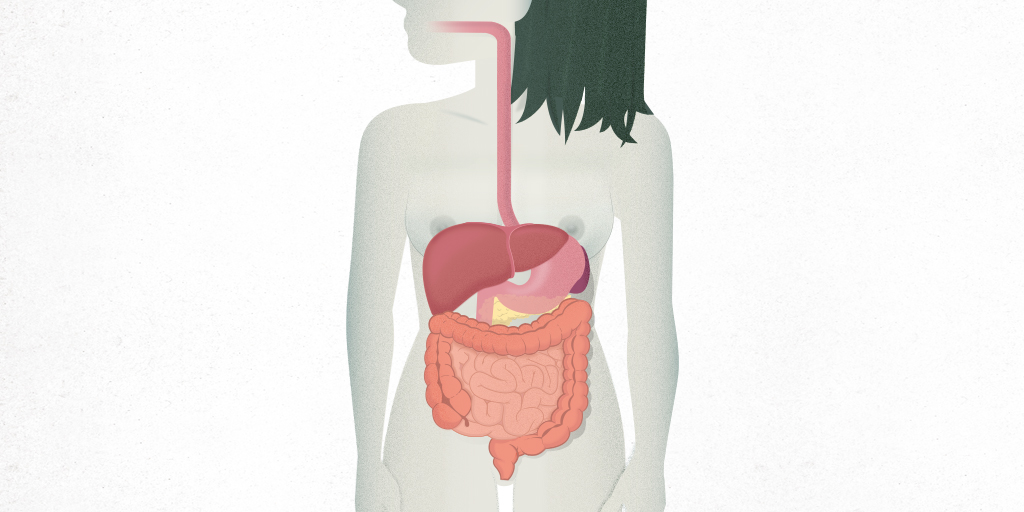
The digestive system comprises a group of organs responsible for digestion.
The system serves to transport food, break it down with digestive juices, absorb its nutrients and then expel waste products as faeces.
The digestive tract is approximately 11 metres from mouth to anus and is composed of the oesophagus, stomach, small intestine and colon.
The small intestine measures between 6 and 7 m and comprises the duodenum, jejunum and ileum, which collectively absorb nutrients from previously digested food. It starts in the duodenum and finishes at the ileocaecal valve where it joins the colon.
The colon is usually between 1,2m and 1,6m long, and its main function is to absorb water from digested food in order to form more solid faeces.
The colon is formed from different segments; they are called the caecum, ascending colon (or right colon), transverse colon, descending colon (or left colon), sigmoid and rectum. From the blind to the rectum, the colon forms a series of curves that form what is called the colic framework.
An inflamed colon loses its capacity to absorb water which translates into less consistent stools (they become pasty or even liquid). Stools may even contain mucus and blood during episodes of severe inflammation.
How many people are affected by Inflammatory Bowel Disease?
Inflammatory bowel disease is more prevalent in developed countries and in the Caucasian population. It affects men and women in equal proportions. The disease can appear at any age; however it is most commonly diagnosed in people aged 20 to 40 years, with a second increase in incidence in people aged 50 to 70.
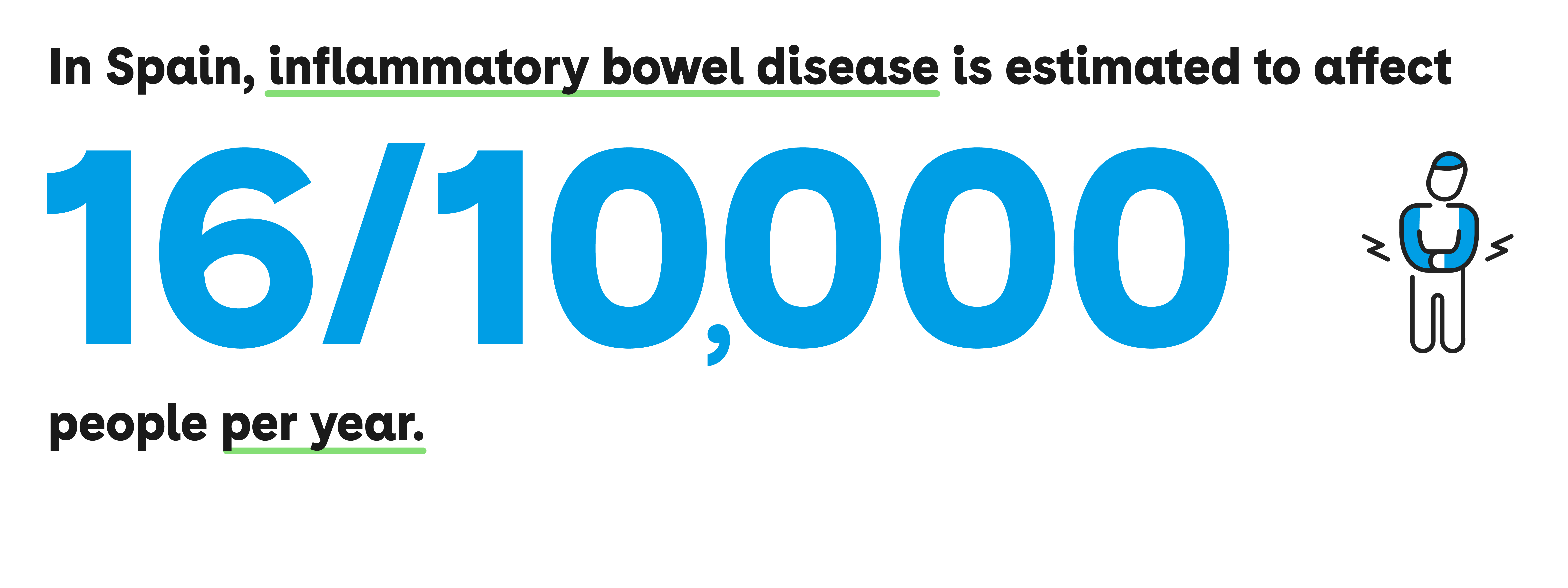
The incidence in Spain has doubled in recent years and now stands at 16 cases per 100,000 people a year (7.5 for Crohn's disease and 8 for ulcerative colitis). Around 300,000 people are currently estimated to suffer from an IDB.
Substantiated information by:


Published: 20 February 2018
Updated: 7 May 2025
Subscribe
Receive the latest updates related to this content.
Thank you for subscribing!
If this is the first time you subscribe you will receive a confirmation email, check your inbox


