Stages of sleep
Sleep is organised into 4–5 cycles per night, each consisting of two main phases:
1. Non-REM (NREM) sleep is divided into three stages:
- N1 (transition sleep – 10%)
- N2 (light sleep – 45%)
- N3 (deep sleep – 20%)
During these stages:
- Brain activity decreases and shifts from a faster to a slower rhythm (a transition from fast to slow brain waves).
- The brain uses less energy, oxygen and glucose.
- The parasympathetic nervous system, which is responsible for rest, becomes dominant. As a result, the heart rate drops, breathing slows down and blood pressure falls.
- Muscle tone decreases, although it does not disappear completely.
- Eye movements stop.
How long does the NREM phase last?
In a healthy young adult, NREM sleep accounts for approximately 75% of total sleep time.
Which is the most important stage of NREM sleep?
- Physical recovery of the body.
- Release of growth hormone.
- Consolidation of declaative memory (the ability to consciously store and recall information, facts and experience).
- Maxium activation of the glymphatic system, which removes waste products from the brain.
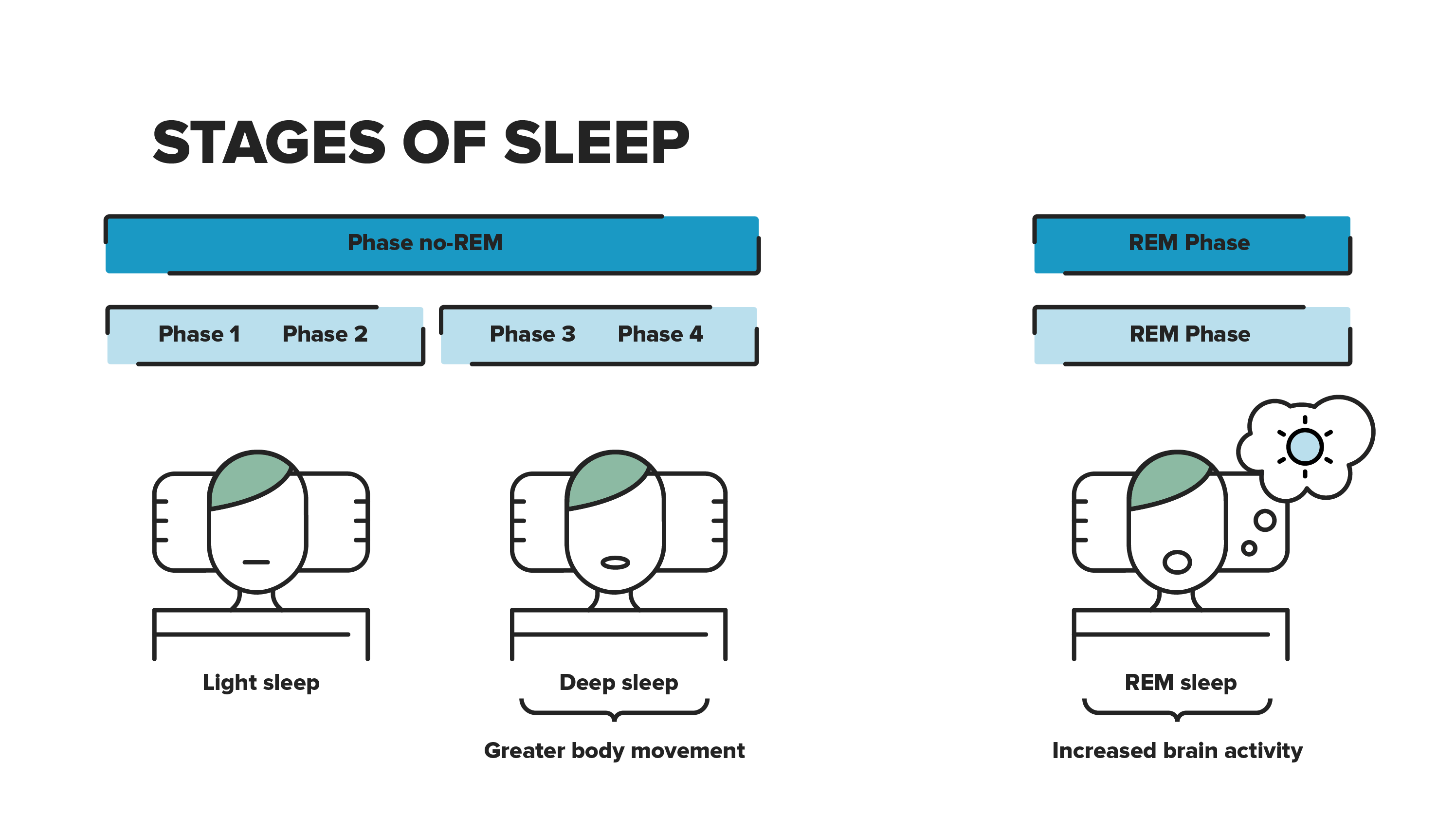
2. REM phase.
It is characterised by increased brain activity in areas associated with memory and emotions (including the hippocampus, the occipital cortex, the limbic system and the brainstem). This is accompanied by rapid eye movements and muscle relaxation. It is the stage most closely associated with vivid dreams and memory consolidation. Although dreaming can also occur during NREM sleep, dreams during the REM phase tend to be longer, more elaborate, with a stronger emotional component and content that reflects our individual concerns, experiences and preferences.
How long does the REM phase last?
In a healthy young adult, REM sleep accounts for approximately 25% of total sleep time.
What happens to the body during the REM phase?
There is generalised muscle paralysis, in which the brainstem blocks motor neurons and prevents the body from moving while we dream. At the same time, heart rate and breathing become irregular, and the sympathetic nervous system, which helps keep us alert, is activated intermittently.
What happens chemically during the REM phase?
Levels of substances that promote wakefulness, such as monoamines and hypocretin, decrease, while the activity of other neurotransmitters, such as acetylcholine, glutamate and glycine, increases.
Substantiated information by:

Published: 26 May 2022
Updated: 15 June 2022
Subscribe
Receive the latest updates related to this content.
Thank you for subscribing!
If this is the first time you subscribe you will receive a confirmation email, check your inbox