Diagnosis of Chronic Kidney Disease
Chronic kidney disease (CKD) is diagnosed based on a combined assessment of blood tests, urine tests and imaging studies. Persistent impairment of kidney function for at least three months is a key diagnostic criterion.
Blood analysis

The following parameters are evaluated:
- Serum creatinine: the primary marker used to estimate kidney function.
- Urea or BUN (blood urea nitrogen): this increases when the kidneys are unable to properly eliminate waste products.
- Electrolytes: potassium, phosphorus, sodium, and calcium.
- Haemoglobin: anaemia is common from the moderate stages of CKD.
- Estimated Glomerular Filtration Rate (GFR or eGFR): this is the volume of blood the kidneys filter each minute through the glomeruli (microscopic structures within the kidney), measured in mL/min/1.73 m².
CKD Classification by Glomerular Filtration Rate (KDIGO)
| Degree | Description | Glomerular Filtration Rate (ml/min/1.73 m²) |
|---|---|---|
| 1 | Normal or high GFR | > 90 |
| 2 | Mildly decreased GFR | 60–89 |
| G3a | Mild to moderately decreased GFR | 45–59 |
| G3b | Moderate to severely decreased GFR | 30-44 |
| 4 | Severely decreased GFR | 15–29 |
| 5 | Kidney failure | < 15 or dialysis |
Urinalysis

The following parameters are evaluated:
- Albuminuria: a key marker of kidney damage; persistent values >30 mg/g are considered pathological.
- Urinary sediment: allows identification of haematuria, casts or other abnormalities.
- Urine volume measurement: useful for assessing oliguria or polyuria.
Imaging tests

Renal ultrasound is the technique of choice for evaluating kidney size, shape and structure. In selected cases, CT scans or magnetic resonance imaging (MRI) are used.
Kidney biopsy
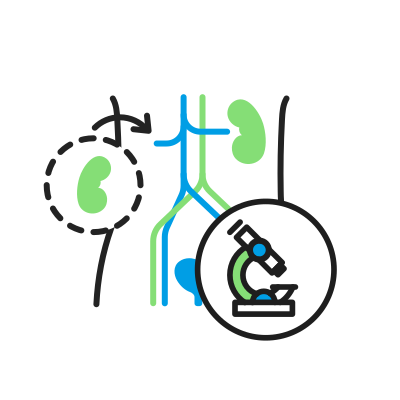
Indicated when glomerular diseases or immune-mediated lesions are suspected, or when the cause of CKD is unclear. It allows for a precise histological diagnosis.
The importance of early diagnosis
Identifying CKD in stages G1–G3 is essential to prevent disease progression, reduce cardiovascular complications and preserve kidney function for years. In the early stages, symptoms are usually minimal or absent.
Substantiated information by:


Published: 20 February 2018
Updated: 3 June 2026
Subscribe
Receive the latest updates related to this content.
Thank you for subscribing!
If this is the first time you subscribe you will receive a confirmation email, check your inbox


