What is the Flu?
Influenza (the flu) is a highly contagious respiratory disease caused by Influenza viruses that primarily infect the nose, throat, bronchi and, in certain cases, the lungs.
Flu explained in first person
When there are no complications, flu can be treated at home and it is important to know that flu cannot be cured with antibiotics. The main prevention strategy is vaccination.

The flu is a seasonal disease in both hemispheres of the world. It usually occurs in winter, with the predominant months of virus circulation being November to March. However, some years the virus may be active from October until the end of April.
The flu can appear suddenly, with symptoms such as high fever, aching muscles, headache and nasal congestion (rhinosinusitis). In severe cases, the disease can cause breathing problems or decompensation of chronic lung or heart diseases, such as chronic obstructive pulmonary disease or heart failure.
Most people recover from the flu on their own. In children, pregnant women, elderly individuals and people with an immunosuppressed state or a chronic illness (such as diabetes or asthma), flu can be more serious and even fatal if it is not diagnosed and treated early.
Viruses that cause Flu
There are three types of influenza viruses, called A, B and C. The virus types A and B are the most important, as they cause epidemics in humans. Influenza virus infection in animals (especially pigs and birds) is also a public health problem.
Type A is the most common and is responsible for causing the most severe epidemics, whereas type B causes more localised outbreaks. The type C influenza virus is detected less frequently and does not trigger epidemics. It only causes mild infections with very few symptoms.
An important characteristic of type A influenza is that it is very variable. It has two proteins or antigens on its surface: haemagglutinin (H) and neuraminidase (N). These two proteins are extremely important for both the virus and humans: for the virus, because they give it the capacity to infect its host; and for humans, because contact with these proteins causes the body to produce antibodies to protect itself against them.
How many people are affected by flu each year?
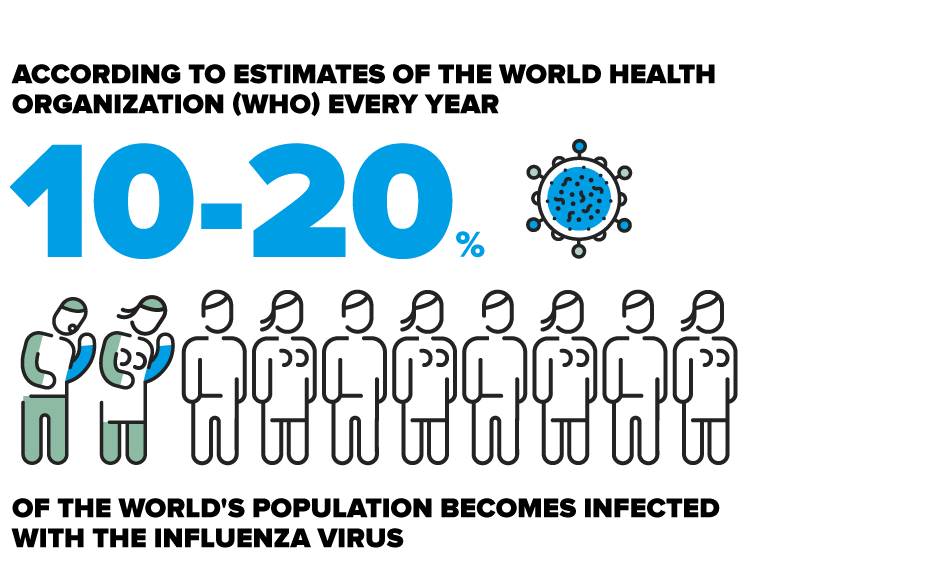
According to estimates by the World Health Organisation (WHO), 10%–20% of the world’s population are infected by the Influenza virus every year. According to these data, the flu virus is estimated to cause between 250,000 and 500,000 deaths from respiratory infections.
Those at the greatest risk of becoming infected and suffering complications are pregnant women, children under 5 years, people over 65 years, patients with chronic conditions such as asthma, heart disease, lung disease or diabetes, and immunosuppressed patients. Healthcare and social care personnel have a higher risk of exposure to the virus and, therefore, of becoming infected, as well as transmitting it to patients or people admitted to nursing homes.
How does the flu virus change?
Every year, the H and N proteins of the Influenza A virus undergo changes, forming new subtypes of the virus. This is the main reason why it is necessary to get vaccinated every year, since a different subtype of the virus can circulate and, to be protected, a vaccine with the subtypes considered most likely in a particular season should be taken.
The flu virus can change in two different ways:
Antigenic drift or minor antigenic changes. These are small gradual variations in the virus that can make it resistant to viruses antibodies formed in previous years. This change occurs in both type A and type B viruses and this is the main reason why people can get the flu many times in their lives. Antibodies formed during a previous infection are often not completely effective in protecting against a new virus subtype. Thus, the flu vaccine has to be modified each year and adapted to the new virus subtypes going around or those expected to.
Major antigenic changes These are major, significant changes as a result of a genetic exchange between the Influenza virus in humans and in animals, leading to a new Influenza virus subtype that has not been known previously. These can cause outbreaks and pandemics that affect the world population.
How is flu transmitted?
Flu viruses are transmitted in the following ways:

From person to person. Through droplets formed when an infected person coughs, sneezes, speaks, shouts or sings. These droplets reach the air and can infect other people if they come into contact with the mouth, nose or eyes.

Touching contaminated surfaces. Indirect infection can occur if contaminated hands touch the mucous membrane of the eyes, nose or mouth.
This is why there is a greater risk of contagion in crowded places, such as nurseries, schools, nursing homes, hospitals and public transport, such as a bus or the underground. The most effective means of prevention in these circumstances is washing your hands regularly. If you have flu, you should use a tissue or cover your mouth when sneezing. Using masks is also a good measure to reduce the risk of contagion.
Adults can transmit the flu virus from the day before the onset of symptoms until 3–7 days afterwards. Children, however, can transmit the virus for more than 7 days after the symptoms first develop.
Substantiated information by:


Published: 10 March 2020
Updated: 18 March 2025
Subscribe
Receive the latest updates related to this content.
Thank you for subscribing!
If this is the first time you subscribe you will receive a confirmation email, check your inbox


