Treatment of Glaucoma
Glaucoma is a chronic and irreversible disease, meaning that the damaged optic nerve cannot regenerate. Therefore, the goal of treatment is to slow disease progression and reduce intraocular pressure, even in patients whose pressure is “normal” at the time of diagnosis.
Treatment options include eye drops, laser treatment or surgical treatment. Sometimes it may be necessary to combine all three treatments to achieve the optimal eye pressure for each patient.
Close collaboration between the patient and the healthcare professional is essential for treatment to be effective.

Diet. A balanced diet rich in vitamins and antioxidants (particularly green leafy vegetables) can help prevent damage to optic nerve fibres.

Exercise and sun. Patients should protect their eyes from the sun, do moderate exercise and maintain a healthy weight.

Vitamin supplements. Supplements such as ginkgo biloba, magnesium, and citicoline have shown some evidence in reducing damage to the optic nerve fibres. They should be used under medical supervision, as high doses may cause side effects such as bleeding. They are considered complementary to pharmacological treatment.
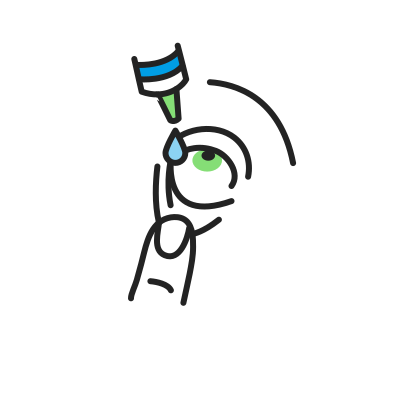
Eye drop medications. In most patients, glaucoma is controlled with eye drop medications applied daily, which lower intraocular pressure and help manage the disease. Some drops reduce the amount of fluid the eye produces, while others lower pressure by increasing fluid outflow.
There is no single ideal pressure for all patients. Depending on the severity of glaucoma and the pressure level at diagnosis, a lower or higher target pressure is established. The ideal pressure must be individualized and is the one that ensures that vision loss does not continue to progress.
The frequency of eye drop application varies depending on the medication. Some drops are used once daily, while others are used two or three times a day. In some cases, a combination of medications is required to achieve adequate intraocular pressure control.
Patients must be aware that they have to follow the treatment closely and apply the drops consistently every day to prevent the disease from worsening. It is therefore very important that they trust in their glaucoma specialist.
Glaucoma treatment with eye drops may cause some adverse reactions, which can be mild or severe. The most common side effects include:
- Burning sensation in the eye.
- Redness of the eye or surrounding area.
- Changes in heart rate (pulse).
- Changes in overall energy levels (feeling more tired).
- Changes in breathing (especially in patients with asthma or bronchitis).
- Dry mouth.
- Blurred vision.
- Eyelash growth.
- Changes in eye color (iris) and in the skin color around the eyes.
If any side effects are noticed due to the treatment, a doctor should be consulted before stopping the eye drops.
Laser treatment can be the first option for certain types of glaucoma and helps improve the eye’s drainage system. These procedures are usually performed in an ophthalmology clinic, and patients can generally return to normal daily activities on the same day. There are two main types of laser used to treat glaucoma.

Trabeculoplasty. This laser technique is for patients with open-angle glaucoma. Laser energy is applied to the filtration angle to improve the drainage system, thus allowing the intraocular fluid to exit the eye more easily and reduce the pressure.

Iridotomy. This type of laser treatment is used for angle-closure glaucoma. A small incision is made in the iris (the coloured part of the eye) to improve the drainage of aqueous humour. The technique increases the space at the front of the eye and reduces the possibility of a sudden increase in intraocular pressure.
When pharmacological treatment is not sufficient to reduce intraocular pressure, or if the glaucoma worsens, surgery may sometimes be necessary. Glaucoma surgery does not improve a patient’s vision, as damaged optic nerve fibres cannot be regenerated. The purpose of surgery is to lower intraocular pressure to levels that help preserve remaining vision.
The most common procedures are:

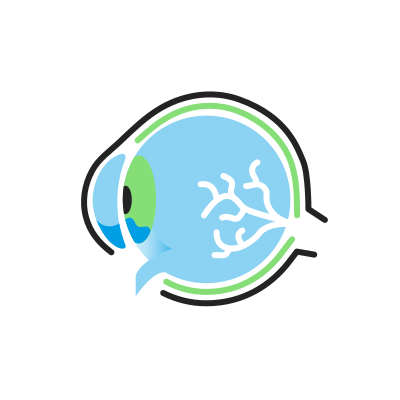
Filtering surgery. Trabeculectomy or deep non-penetrating sclerectomy are the most commonly used procedures. A small opening is created in the sclera (the white part of the eye), forming a new pathway for fluid to exit the eye. A pocket is created in the conjunctiva (the outermost layer of the eyeball), where the fluid accumulates (filtering bleb) and remains protected under the eyelid (therefore not visible to the naked eye). In this bleb, the fluid is absorbed by the surrounding tissues, thereby reducing pressure.
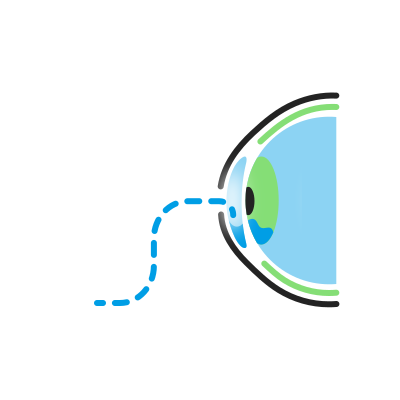
Drainage devices. A drainage tube is implanted inside the eye to channel fluid to a larger area called a reservoir. This is located beneath the conjunctiva and sclera. The fluid is then absorbed by surrounding veins.
Glaucoma surgeries require postoperative care and regular follow-up visits over several months to ensure proper function. Postoperative care often includes anti-inflammatory and anti-scarring medications (in the form of eye drops or injections), as well as specific care or procedures to prevent closure of the newly created drainage system or to avoid excessive drainage.
Being operated on does not mean the patient is cured, and regular follow-up is necessary to ensure that the disease does not continue to progress.
- Minimally invasive surgeries (MIGS and MIBS). In recent years, new glaucoma implants have been developed that are very small and inserted through minimal incisions, allowing for a quicker recovery and fewer complications. These implants are placed directly into the transparent part of the eye and positioned within the drainage system using a special applicator. At present, these procedures are reserved for patients with mild to moderate glaucoma.
- Sustained-release systems. Some implants, placed inside or around the eyeball, can store glaucoma medications and release them gradually over several months. These systems are still under investigation.
Substantiated information by:


Published: 19 October 2018
Updated: 28 May 2026
Subscribe
Receive the latest updates related to this content.
Thank you for subscribing!
If this is the first time you subscribe you will receive a confirmation email, check your inbox
Glaucoma related news


30 November 2023
What are the most common eyelid diseases?

16 October 2023