What is Glaucoma?
Glaucoma is a disease of the optic nerve, mainly caused by an increase in intraocular pressure, leading to a progressive loss of peripheral vision. The disease does not produce symptoms until vision loss occurs. This loss is irreversible, although its progression can be prevented if detected early.
Glaucoma explained in first person
There are 50% of cases that are not diagnosed. And the diagnosis is important to start a treatment as soon as possible that, we must not forget, is designed to preserve the vision that the patient still has.
My diagnosis was relatively easy because of family issues, our family history. My mother had it for many years, she lost her sight and following that, the family alarm went off.

Glaucoma is a group of eye diseases that damage the optic nerve and cause a progressive loss of peripheral vision. The optic nerve is responsible for transmitting visual information from the eye to the brain.
Although vision lost due to glaucoma cannot be restored, early diagnosis, regular monitoring, and treatment can slow the disease and prevent further visual deterioration.
Intraocular pressure
The eye contains a fluid called aqueous humour, which is continuously renewed throughout the day. This fluid drains from the eye through a mesh-like filter (the trabecular meshwork), located at the angle between the cornea (the transparent outer layer) and the iris. Because this fluid is contained within a closed space, it generates a certain level of pressure. For the eye to function properly, a certain level of pressure is necessary to maintain its shape. However, if the pressure becomes too high (or higher than a particular eye can tolerate) this pressure compresses the optic nerve, causing damage to its fibres.
Tipos de Glaucoma
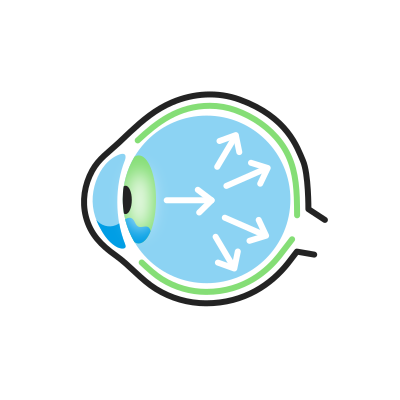
Primary open-angle Glaucoma. In this type, the eye’s filter (the angle) is open and not blocked by other ocular structures, but does not function properly. As a result, the aqueous humour does not drain correctly. This is the most common type of glaucoma and develops very slowly, often without noticeable symptoms.
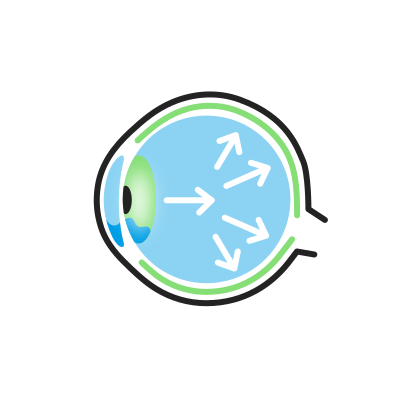
Angle-closure glaucoma. The eye’s drainage angle is closed, and the aqueous humor does not have enough space to exit the front part of the eye. This type is much less common and can occur slowly (chronic) or suddenly (acute), with a rapid and painful increase in intraocular pressure.
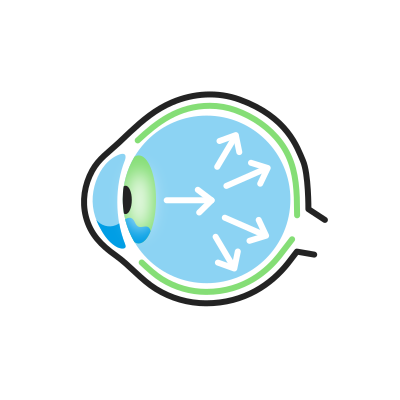
Secondary glaucoma. In this case, the disease appears as a consequence of another eye condition or trauma that ultimately affects the eye’s drainage system. This may occur, for example, due to eye inflammation (uveitis), excess pigment (pigmentary glaucoma), or the accumulation of exfoliative material within the eye (pseudoexfoliation). It can also result from the growth of new blood vessels within the drainage system that impair its function (neovascular glaucoma), among other causes.

Childhood Glaucoma. This is a very rare but potentially severe type. It is usually present at birth (congenital) or develops shortly afterwards. It is caused by a malformation of the eye’s structures.
How many people are affected by Glaucoma?
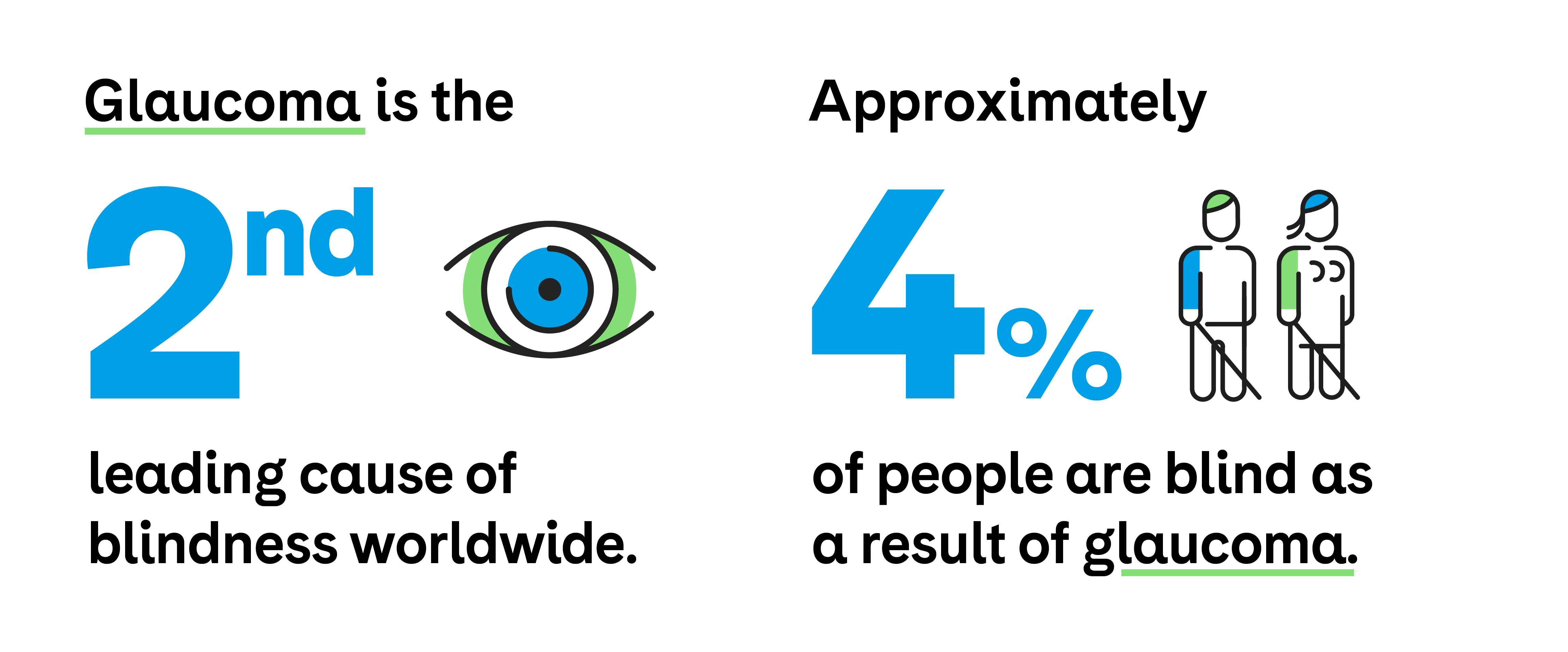
Glaucoma is the second leading cause of blindness worldwide (accounting for around 3.5% of all forms of blindness) and it is the leading cause of irreversible blindness. It is estimated that around 80 million people have glaucoma, and this figure is expected to rise to 180 million by 2060.
In Spain, glaucoma affects 2–3% of the population over the age of 40. Recent studies estimate that around 1.5 million people have glaucoma, although half of them are unaware that they have the disease.
Related contents
Substantiated information by:


Published: 19 October 2018
Updated: 28 May 2026
Subscribe
Receive the latest updates related to this content.
Thank you for subscribing!
If this is the first time you subscribe you will receive a confirmation email, check your inbox
Glaucoma related news


30 November 2023
What are the most common eyelid diseases?

16 October 2023