


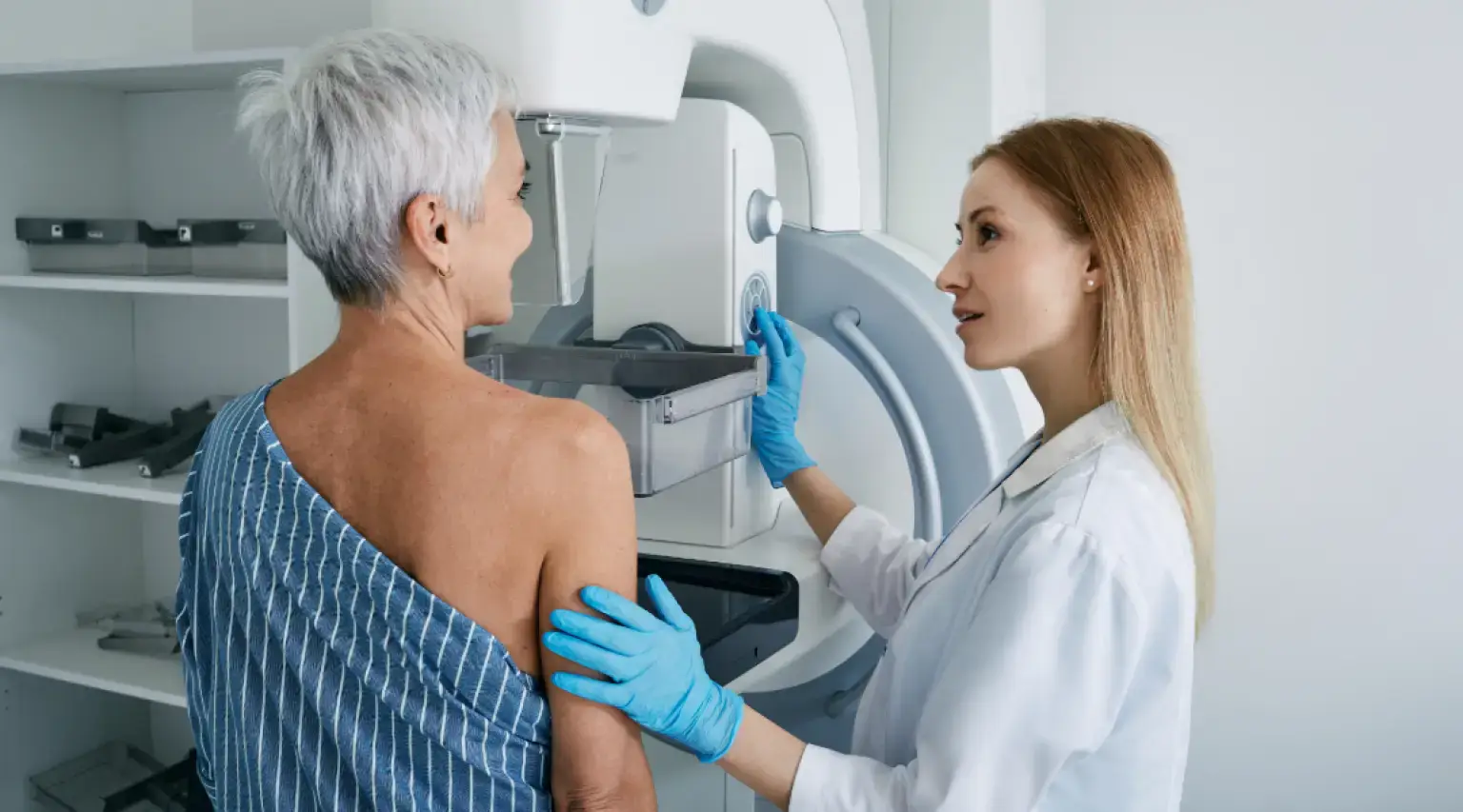
Screening programmes have become an essential public health tool, particularly for two types of cancer: breast cancer and colorectal cancer.
Cancer has been the leading cause of death in Spain since 2024 when, for the first time ever, it surpassed cardiovascular diseases, such as myocardial infarction and stroke. However, prognosis varies considerably among cases, and a key determinant is the stage at which the disease is detected. In this context, screening programmes have become an indispensable strategy.
The development of cancer is a long and complex process. It begins with mutations in cells that, over time, may lead to uncontrolled growth. This process can take years or even decades and often remains asymptomatic for a prolonged period. This explains why individuals with healthy lifestyles may also develop the disease. As Dr Jaume Grau notes, “Cancer does not appear overnight; it is a slow process that provides an opportunity to detect it before it becomes clinically apparent.”
“Cancer does not appear overnight; it is a slow process that provides an opportunity to detect it before it becomes clinically apparent.”
Dr Jaume Grau, specialist in Preventive Medicine and Epidemiology
By taking advantage of this window of opportunity, screening aims to identify the disease at an early stage, when it has not yet caused symptoms and treatment is more effective. However, not all cancers are suitable for screening. To implement a population-based screening programme, the disease must be sufficiently common, have a detectable course in its early stages and have reliable and safe tests available for its diagnosis.
Colorectal cancer screening: tests, objectives and benefits
These requirements are clearly met in the case of colorectal cancer. This type of cancer often originates from polyps, which are benign lesions that may progress to malignant forms over time. Screening makes it possible to detect these polyps or early signs of cancer before they progress. In Spain, colorectal cancer screening is offered to individuals between 50 and 74 years of age. In Catalonia, from 1 July onwards, the eligible age range will begin to be progressively expanded to include 70-year-olds, with the aim of eventually reaching 74 years of age.
The target age range is selected according to risk, which has been observed to increase significantly after 50 years of age.
The primary screening test is the faecal occult blood test (FOBT), which can be performed at home using a simple kit. If the result is positive, the diagnostic process continues with a colonoscopy, an examination that allows visualisation of the colon and the removal of potential lesions. Although this procedure may cause some concern, it is essential for reducing both the incidence and mortality of colorectal cancer.
“Through screening, we aim to detect the tumour before it becomes clinically apparent; early detection is what makes the difference.”
Dr Jaume Grau, specialist in Preventive Medicine and Epidemiology
Breast cancer screening: early detection with mammography
In the case of breast cancer, screening is based on mammography, an imaging technique capable of detecting tumours before they become palpable. Early detection significantly improves treatment outcomes and survival. For breast cancer, the Spanish Ministry of Health has approved the expansion of the screening age range to women between 45 and 74 years of age, in line with European Union recommendations. In Catalonia, this expansion is expected to begin from 2027.
An important consideration is that screening does not replace other forms of surveillance but rather complements them. The belief that breast self-examination is sufficient to detect breast cancer still persists. However, self-examination cannot detect very small or deep lesions. “Through screening, we aim to detect the tumour before it becomes clinically apparent; early detection is what makes the difference,” emphasises Dr Grau.
Healthy lifestyle habits: the most effective measure for reducing cancer risk
Beyond diagnostic tests, specialists agree that prevention also involves maintaining healthy lifestyle habits. A balanced diet rich in fruit and vegetables, regular physical activity, avoiding tobacco use and reducing alcohol consumption are factors that help lower the risk of developing these cancers. Nevertheless, no preventive measure is infallible, which is why screening is essential.
Despite its proven benefits, participation in screening programmes is still not optimal. Some individuals do not take part because of fear or a lack of awareness or time. Increasing participation is one of the major challenges facing the healthcare system, as the effectiveness of screening depends to a large extent on its uptake by the public.
In short, screening not only enables earlier detection of cancer but can also prevent it in certain cases. It is a simple, accessible tool with a direct impact on public health. Participation in these programmes is, in many cases, a decision that can save lives.


