What is myopia?
Myopia is a common problem with eye focus that can affect vision at all distances, but particularly things that are very far away. It can be easily corrected with glasses or contact lenses.
Vision with myopia
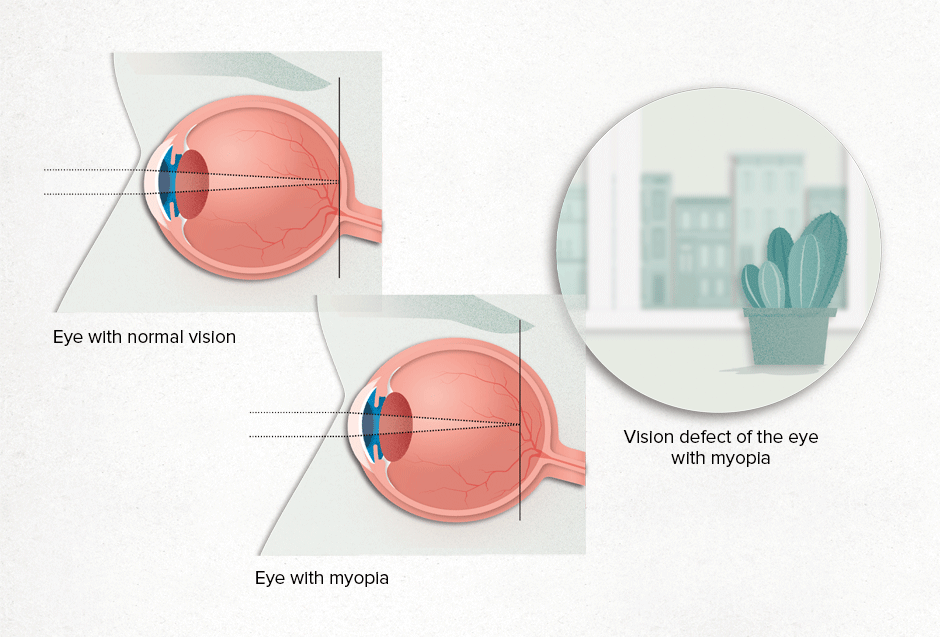
Myopia is a problem with focus. The eyeball length is longer, which means that the light comes into focus in front of the retina instead of behind, causing things to look blurry.
How many people are affected?
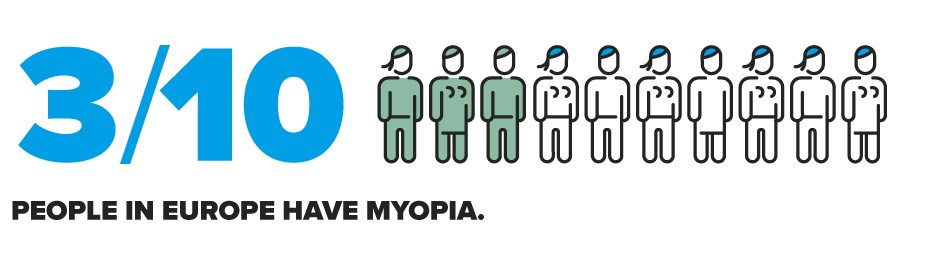
Myopia is one of the most prevalent eye disorders. High myopia is associated with diseases that increase the risk of serious and irreversible vision loss, such as retinal detachment, subretinal neovascularisation, cataracts and glaucoma.
Different studies have confirmed that the prevalence of this refractive error varies depending on race and geographical region, and also point to an increase in the prevalence of myopia in the last 50 years. The problem is particularly pronounced in prosperous industrialised areas in East Asia.
Is myopia common in children?
The trend toward myopia among European children and adolescents is worrying. A study published in The Lancet Regional Health-Europe in 2025 with a sample of 128,000 people from 14 European countries found myopia in 5.5% of children aged 6-11, 25.2% among adolescents aged 12-17, and 50% among 18-year-olds.
The figures are even higher in East Asia, where up to 90% of children are myopic. Myopia generally appears around the age of eight years, but it can be present at any age, from early childhood.
In most cases, myopia stops increasing at the end of adolescence or in early adulthood (17-25 years).
Substantiated information by:

Published: 21 October 2020
Updated: 7 August 2025
Subscribe
Receive the latest updates related to this content.
Thank you for subscribing!
If this is the first time you subscribe you will receive a confirmation email, check your inbox