

20 January 2026
PortalClinic home
Joint project with
BBVA Foundation website.This link opens in a new tab.
Frontal fibrosing alopecia
Reading time: 2 min
What is frontal fibrosing alopecia?
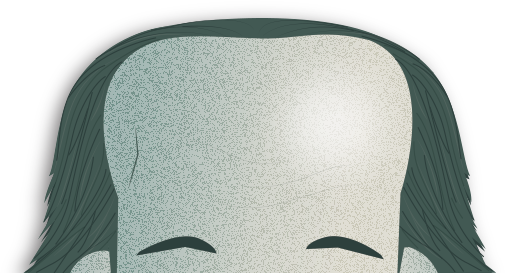
Frontal fibrosing alopecia is a type of scarring alopecia characterised by a progressive, symmetrical and well-defined recession of the hairline along the forehead and temples. As it is a scarring alopecia, the lost hair does not regrow, making it crucial to seek medical advice at the first signs of eyebrow loss or frontal hairline recession, so that treatment can be started as early as possible.
It is currently one of the most common forms of scarring alopecia whose incidence has increased significantly in recent decades, particularly among postmenopausal women, although it may also affect premenopausal women and, more rarely, men.
Signs and symptoms of frontal fibrosing alopecia
The signs of frontal fibrosing alopecia include progressive, symmetrical recession of the frontal hairline. Partial or complete eyebrow loss is common and, in many cases, may be the first sign of the disease, even before it affects the scalp.
As the condition progresses, areas of alopecia may appear behind the ears or in other facial and body regions. Hair loss is often accompanied by symptoms such as itching (pruritus) or a sensation of burning or tightness.
Causes of frontal fibrosing alopecia
Although its exact cause is unknown, several hypotheses have been proposed without being conclusively confirmed. These include hormonal factors, immune system disturbances, the potential role of endocrine disruptors—whether through exposure to certain cosmetics or sunscreens—as well as environmental pollution.
Diagnosis of frontal fibrosing alopecia
Trichoscopy is essential for diagnosis, as it can identify possible signs of inflammation and follicular damage, including:
- Absence of follicular openings.
- Accumulation of keratin and inflammatory cells around the follicles.
- Vascular changes in the perifollicular area.
- Follicular inactivity.
Treatment of frontal fibrosing alopecia
Treatment aims to reduce inflammation and stabilise the disease through:
- Topical or injectable anti-inflammatory therapies to modulate the immune response.
- Topical treatments or medications (e.g., minoxidil) to improve hair thickness and density in unaffected areas.
- Topical and oral antiandrogens.
PortalClinic home
Joint project with
BBVA Foundation website.This link opens in a new tab.
Sorry this content wasn't helpful to you. Send us your comment and we will take it into account to continue improving.
Thanks for your help!
An error has occurred and we were unable to send your opinion, please try again later.
Substantiated information by:
Andrea Combalía
Dermatologist
Dermatology Department
Published: 13 May 2026
Updated: 13 May 2026
The donations that can be done through this webpage are exclusively for the benefit of Hospital Clínic of Barcelona through Fundació Clínic per a la Recerca Biomèdica and not for BBVA Foundation, entity that collaborates with the project of PortalClínic.
Subscribe
Receive the latest updates related to this content.
Thank you for subscribing!
If this is the first time you subscribe you will receive a confirmation email, check your inbox
An error occurred and we were unable to send your data, please try again later.