

20 January 2026
PortalClinic home
Joint project with
BBVA Foundation website.This link opens in a new tab.
Alopecia areata
Reading time: 2 min
What is alopecia areata?
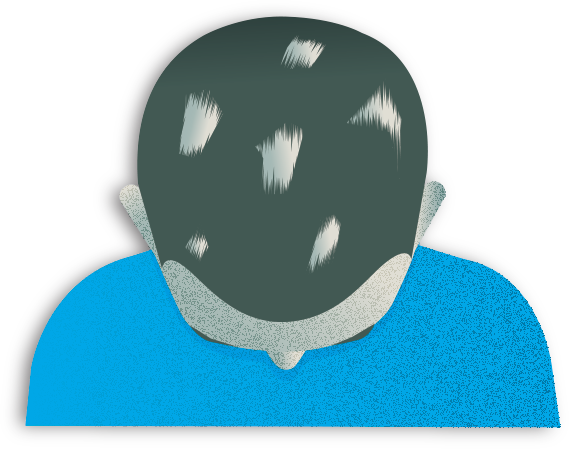
Alopecia areata is a type of non-scarring alopecia that presents as sudden, well-defined hair loss in patches, which may be single or multiple and, in some patients, may coalesce or progress to more extensive involvement.
It is a relatively common condition, affecting around 1–2% of the population and can occur at any age, from childhood to adulthood, with a variable course characterised by periods of activity and remission.
Signs and symptoms of alopecia areata
It typically occurs as well-defined patches that are usually asymptomatic, although some patients may report mild itching (pruritus), a sensation of tightness or discomfort preceding hair loss.
Causes of alopecia areata
It occurs following an immune reaction against the hair follicle itself. This is an autoimmune response mediated by T lymphocytes that target the hair follicle during the growth (anagen) phase. Genetic predisposition, the presence of other autoimmune diseases and emotional stress all play a role in the condition.
Diagnosis of alopecia areata
The key diagnostic test for alopecia areata is trichoscopy. This technique can identify the following features:
- Exclamation mark hairs: these are thinner at the base and thicker at the tip, indicating follicular damage.
- Yellow dots: follicular openings filled with sebum and keratin debris.
- Black dots: remnants of hairs broken at the level of the scalp.
- Short regrowing hairs: a sign of follicular activity.
These findings help determine the stage of the disease and the degree of inflammation.
Treatment of alopecia areata
Treatment is tailored to the extent and severity of the alopecia. It may include anti-inflammatory medications injected directly into the affected area (intralesional corticosteroids) or potent topical therapies for localised lesions, as well as systemic anti-inflammatory medications (systemic corticosteroids) in more extensive cases.
In recent years, drugs known as JAK inhibitors, such as baricitinib and ritlecitinib, have been developed and have demonstrated efficacy in controlling the immune attack on the hair follicle and promoting hair regrowth.
PortalClinic home
Joint project with
BBVA Foundation website.This link opens in a new tab.
Sorry this content wasn't helpful to you. Send us your comment and we will take it into account to continue improving.
Thanks for your help!
An error has occurred and we were unable to send your opinion, please try again later.
Substantiated information by:
Andrea Combalía
Dermatologist
Dermatology Department
Published: 13 May 2026
Updated: 13 May 2026
The donations that can be done through this webpage are exclusively for the benefit of Hospital Clínic of Barcelona through Fundació Clínic per a la Recerca Biomèdica and not for BBVA Foundation, entity that collaborates with the project of PortalClínic.
Subscribe
Receive the latest updates related to this content.
Thank you for subscribing!
If this is the first time you subscribe you will receive a confirmation email, check your inbox
An error occurred and we were unable to send your data, please try again later.